#267 / Confidential
When you wake up, you check an AI-generated “daily horoscope.” You head to work and hand analysis and planning over to AI. On your break, you type a few prompts and crank out images on demand. At night, you scroll through AI-made reels until you fall asleep. That loop has become normal life.
And yet—ironically—when you look up from the screen, the real world is pulling in the opposite direction.
My daughter was born and raised in America, but at dinner she’ll put on a Korean drama set in 1988—a time and place she’s never lived in—and watch Taek and Deok-sun like they’re part of her own memories. The nostalgia of a warm floor, a simple bowl of rice, and a slower kind of comfort somehow registers as hers.
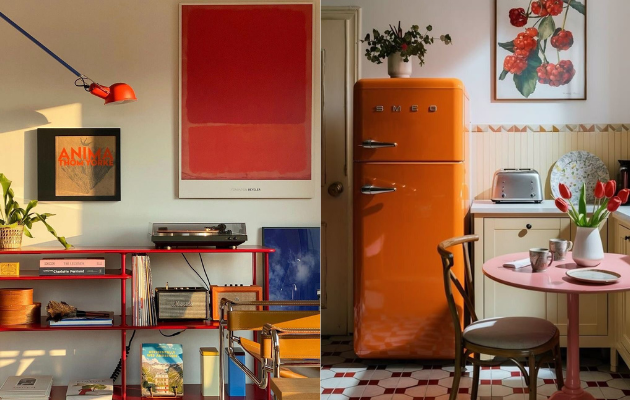
On Reels, RetroCore interiors are everywhere: cozy lighting, saturated colors, and that “grandma’s house but make it cool” mood flooding our feeds. And in the NBA, Golden State Warriors star Stephen Curry showed up to last month’s season opener wearing wired earbuds instead of AirPods—quietly making the point that “corded earphones” are suddenly a style item again.
Even pop culture is leaning hard into it. In Bruno Mars’ “I Just Might” music video—the one that hit No. 1 on the Billboard chart—you see flashy patterned suits, heavy gold jewelry swinging with the beat, and a full-on throwback to the disco/funk peak of the 1970s, from wardrobe to set design.
|
|
|
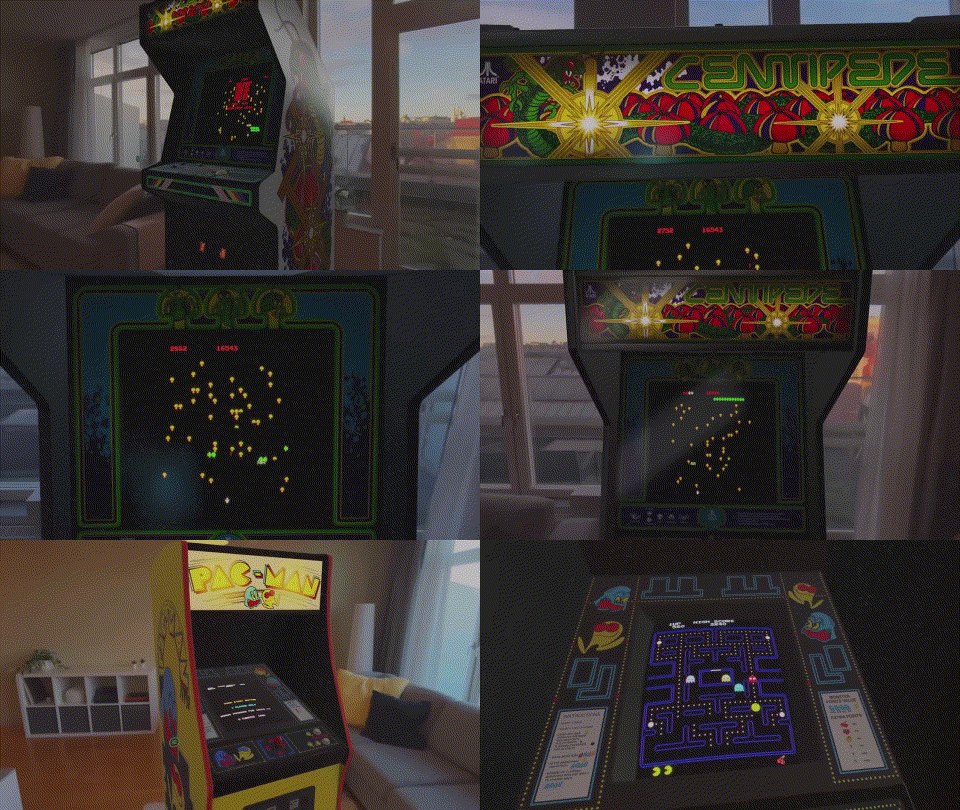
Apple has announced Retrocade, a retro game experience for its $3,500-starting Vision Pro. Using XR technology, it lets you summon a virtual arcade machine into your space and play directly on it. It’s set to launch on February 5. Was this necessary? |
|
|
🤔 So why is this happening?
Think about wired earphones. Yeah—no ANC, obviously. But they don’t need charging. No pairing. No “why won’t this connect” drama. You plug them in, and they work. Simple. Instant. Intuitive.
Wireless earbuds, on the other hand, come with their own little tax: dead batteries, Bluetooth dropouts, and that low-grade panic when you lose the case.
And wired earphones are also perfect for a certain kind of effortless cool. The kind that looks unbothered precisely because it’s not trying too hard. They’re cheap, easy to replace, and financially low-stakes—which matters right now. In an inflation-heavy, “everyone’s cutting back” era, they quietly broadcast a message:
“I’m not out here overspending. I’m practical. And still cool.”
(And yes—sometimes it’s less of a statement and more of a survival move: kids lose their AirPods, get hit with the classic mom back-of-the-head smack, and end up buying wired ones the next day.) |
|
|
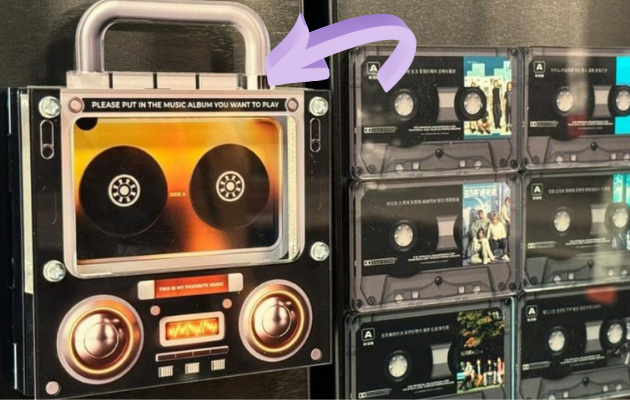
I’m starting to notice that Retrocore is becoming more and more segmented. It’s no longer just about owning old objects. Now the market is flooded with products that only look retro on the outside.
(Like those cassette-tape–looking items where you insert what appears to be a tape into a speaker and the music plays—basically nostalgia turned into a refrigerator magnet.)
I don’t know… but for some reason, I just don’t feel like buying them.
Why is that? |
|
|
What if we look for the answer in the 1983 Defender?
The 1983 Defender shows what happens when retro design goes beyond trend and is paired with real technical substance. When form and function are aligned, the result isn’t nostalgia for nostalgia’s sake—it’s synergy.
Products that borrow only the look of retro, without its underlying integrity, end up like oil floating in water—pushed around, never fully mixing, and never quite holding real value. It’s worth stopping to think about that again. |
|
|
🌍 Stronger Security in Unfamiliar Places: Street Mode
The core function of the Revolut app—known for mobile banking, payments, and transfers—is money transfers. When a user requests a transfer while far away from locations they’ve marked as safe, such as home or work, Revolut activates Street Mode, a location-based security feature that delays the transfer by one hour.
During this delay, users must complete two rounds of biometric authentication before the transfer is finalized. This gives them a chance to cancel the transaction if suspicious activity—such as phishing—is detected. It also helps prevent secondary crimes that can occur if a phone is stolen while the user is traveling or shopping in an unfamiliar area.
Users can manually designate trusted locations. When a transfer is made from a trusted place and selfie verification is completed, the transfer goes through immediately. On the other hand, if a transfer is initiated outside of these designated locations, the transaction is automatically delayed by one hour by the system. The company explains this by saying, “Just as people use fanny packs to protect valuables from theft, Revolut is now using technology to help prevent theft as well.” |
|
|
📈 Jenna's Insight | A Serious Urban Issue: “Theft”
There’s a saying in LA that if your car gets stolen, you’re better off hoping it never comes back. That’s because when it is recovered, it’s often found in a condition that’s almost impossible to fully restore. If it doesn’t come back at all, you can at least file an insurance claim. But when it’s recovered in a half-destroyed state, things get complicated.
What’s more, theft isn’t limited to cities we typically associate with crime. It happens frequently even in Irvine, a city widely considered safe. Theft occurs in a split second, often faster than people expect. That’s why the question matters: how can we provide preventive security—like Street Mode—before theft actually happens?
# Detecting High-Risk Moments Before They Break
The key to preventing theft isn’t “unbreakable glass,” but a system that detects the moment when the risk of breaking increases.
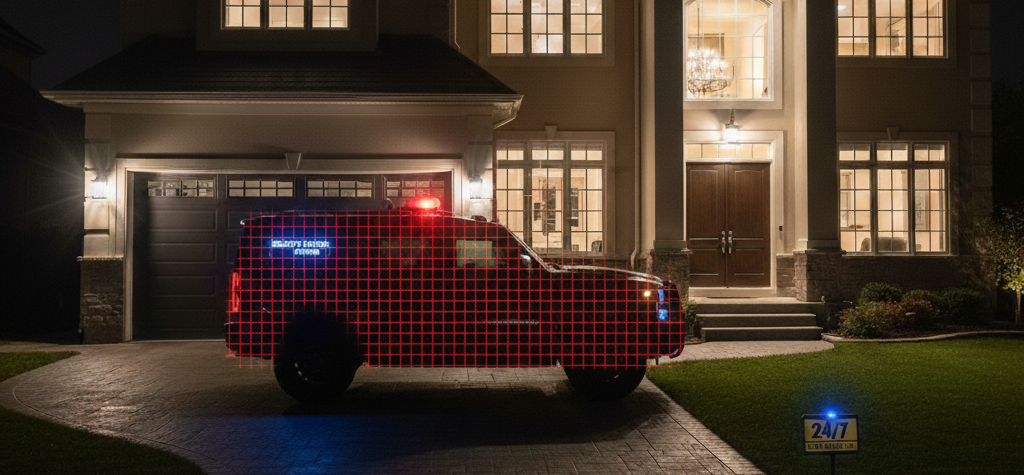
For example, when a car is parked for a long time in an unfamiliar area and the trunk is opened to unload luggage, the risk of theft rises sharply. In that moment, instead of reinforcing the glass, the car could respond by turning on interior lights or flashing external lights as a visual warning, or by sending an immediate alert to the owner.
The logic behind Revolut’s Street Mode aligns closely with this idea. Rather than delaying every transaction, it identifies when a user is far from a trusted location and temporarily slows the process.
Just as important, this kind of security should evolve in a direction that does not disrupt daily life. Warnings that are too frequent eventually get ignored. Alerts that go off all the time stop meaning anything.
Ultimately, preventing theft isn’t about loud alarms. It’s about designing an experience that quietly reads the environment and the user’s behavior, and gently signals: “This is not the moment to proceed.” The future of theft prevention won’t rely on noise or intimidation, but on calm, contextual protection that understands the situation and responds intelligently.
|
|
|
🛏️ Camping Mattress Innovation
-
-
Modular structure reduces system complexity and improves maintainability.
-
Portability and assembly are designed into the product, making the overall experience feel seamless.
-
Rethinking the physical structure leads to innovative ways of solving the problem.
-
Customization—giving users real design choices—is a core part of the experience.
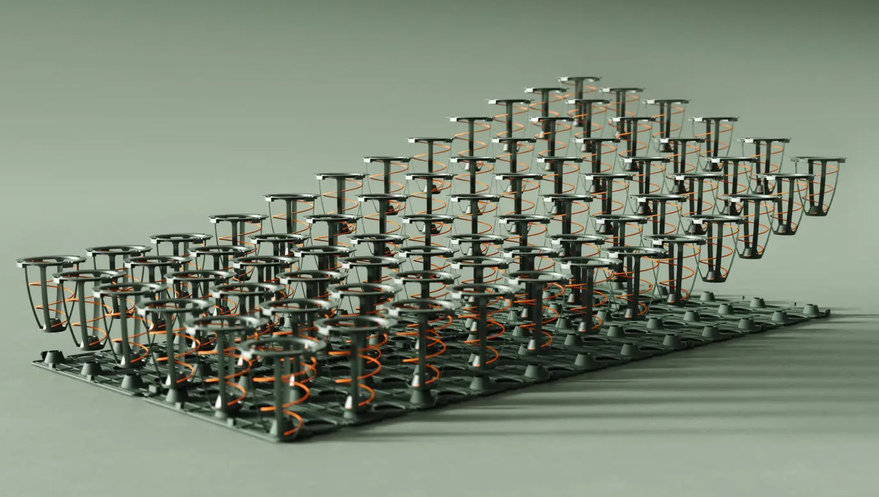
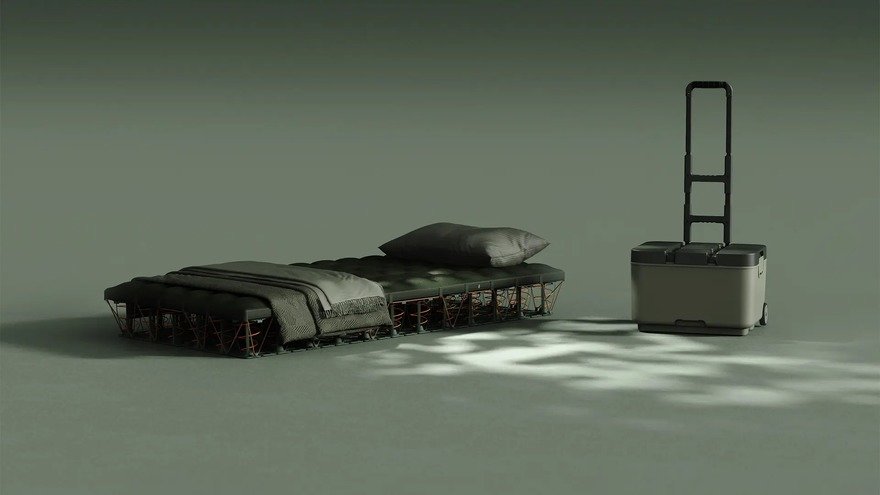
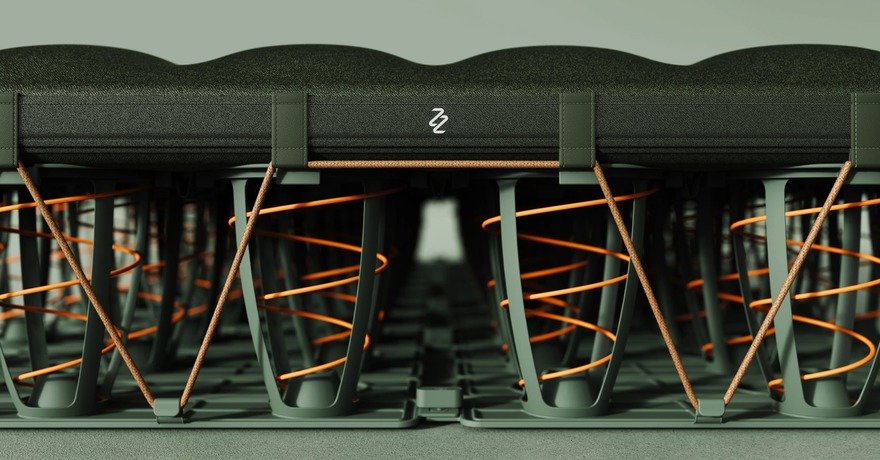
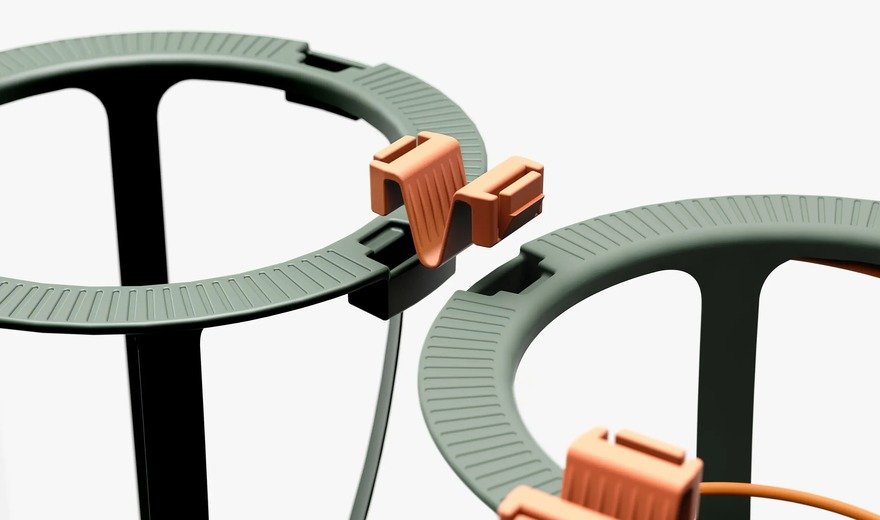
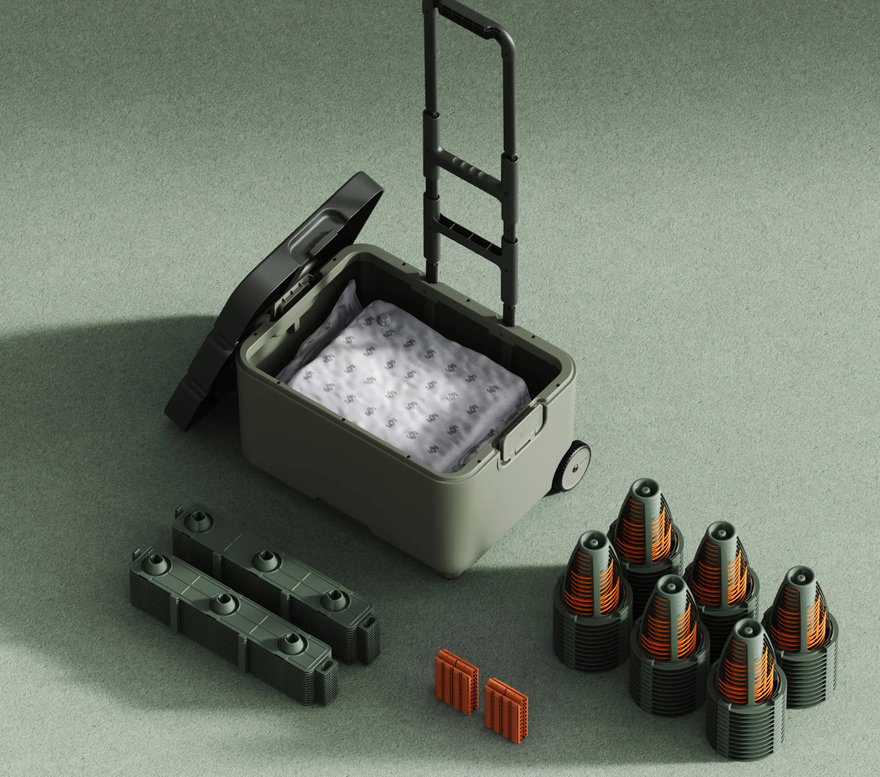
Layer, a design studio based in the UK, created a new kind of mattress by moving away from the typical single, bulky form. Instead, it’s built from multiple small, spring-like cylindrical modules that assemble into one mattress. When it’s time to travel, the modules can be stacked and packed down to about the size of a small cooler, making it much easier to carry and store—exactly what you want for camping.
|
|
|
One key point here is the way the product is designed like a system. The modular approach doesn’t just make it easier to transport—it also means you can replace only the damaged parts, making repairs and recycling much more practical.
It also opens up real performance customization: the springs can be offered in multiple firmness options, so users can tune cushioning by body area. Even partners can customize left vs. right differently to match their individual preferences.
In other words, instead of solving comfort purely through material (foam), this feels like a case where structure and configuration were used to design the performance and the overall experience. |
|
|
# Example 1 : USM Haller
USM Haller isn’t just furniture—it’s a system. Built from a metal frame and interchangeable panels, it lets users assemble shelves, storage units, and tables to fit their needs. Instead of buying a single, fixed piece, you’re investing in a structure that can grow, change, and adapt over time.
That system approach comes with clear advantages:
-
If a panel gets scratched or damaged, only that part needs to be replaced.
-
When your space changes, the same components can be reconfigured into something new.
-
Convenience isn’t solved through premium materials alone, but through structural logic and modular design.
This is furniture designed less like an object—and more like infrastructure.
|
|
|
# Example 2 : Nike ISPA / Salomon Modular Footwear 컨셉
Nike ISPA and Salomon’s modular footwear concepts treat a shoe less like a single object and more like a replaceable system. The midsole, outsole, and upper are designed as separable parts—so when cushioning wears down, you can swap the sole instead of replacing the entire shoe. It also allows different sole combinations depending on where and how you’re using them.
What’s interesting is the comfort logic. Instead of relying mainly on foam softness, the feel comes from structural support and load distribution—spreading impact through the design rather than leaning on “comfortable material” to do all the work.
In that sense, it’s the same kind of solution Layer is exploring: designing performance through structure and configuration, not just materials.
|
|
|
Beginner Ceramics
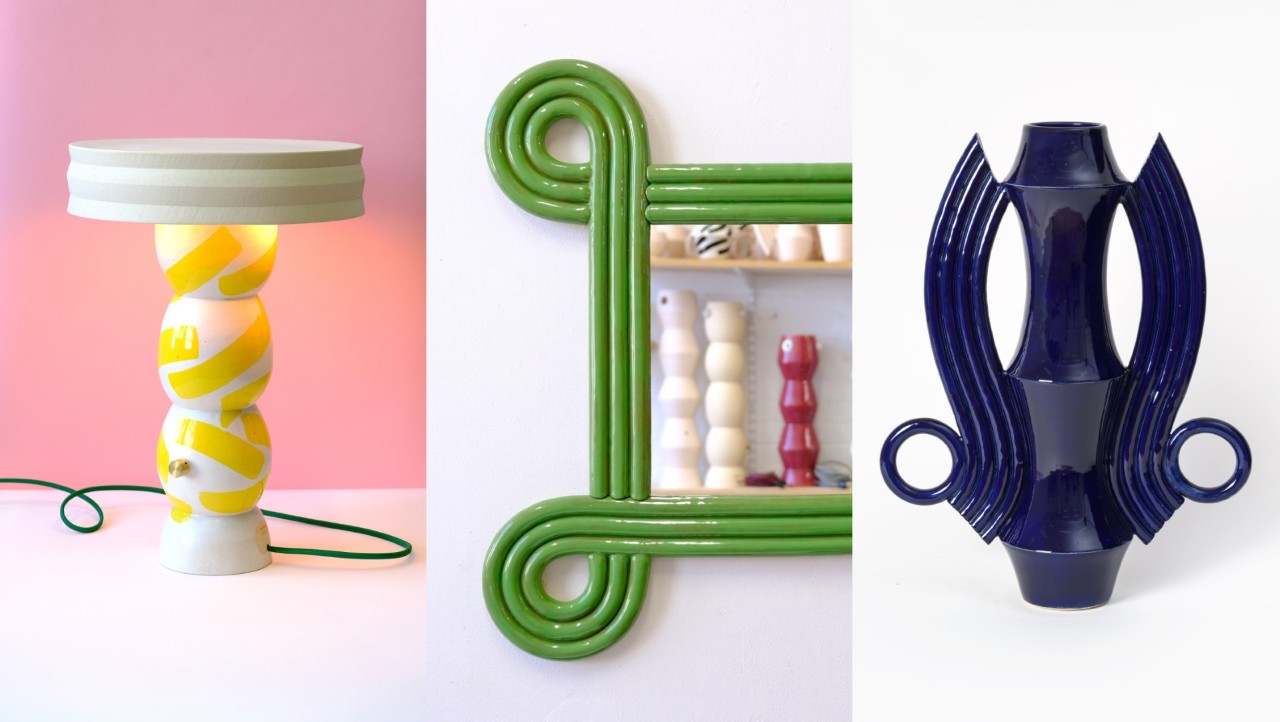
Beginner Ceramics is a Brooklyn-based ceramic studio whose name literally reads like “ceramics for beginners”—but it’s actually run by experts. Their mindset is simple: ceramics doesn’t have to be treated with so much seriousness.
They have the technical skill to do things properly—but instead, they often use that skill to intentionally create work that feels playful and a little mischievous. In other words, strong craftsmanship, aimed at deliberately unserious outcomes.
|
|
|
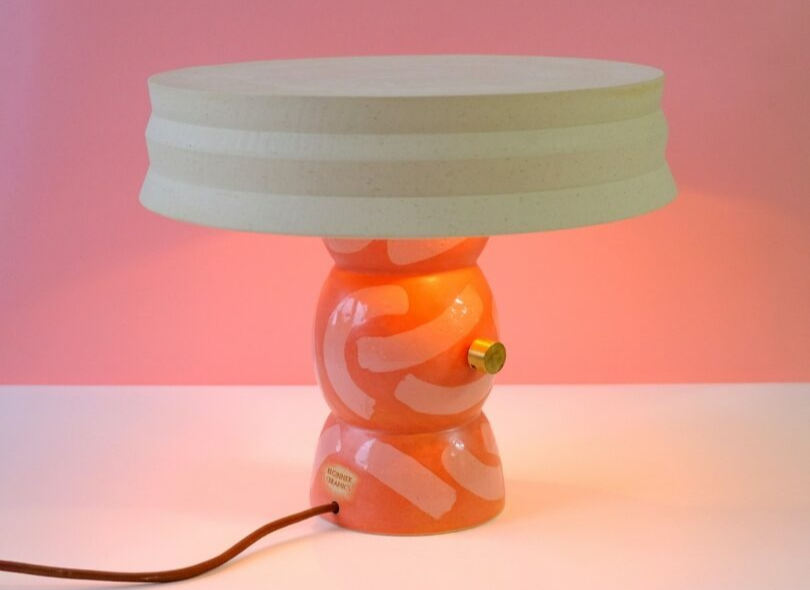
They make objects with clear everyday functions—cups, lamps, mirrors—but they avoid forms that look like “sculpture for sculpture’s sake.” Instead, a lot of their pieces lean into crooked, lumpy, irregular shapes and patterns. They don’t try to hide the fact that they’re handmade.
You see it immediately: more curves than straight lines, more texture than smoothness, more slight misalignment than perfect symmetry. It feels less like something from a factory and more like something from a real studio—where you can almost sense the maker’s hands in it.
|
|
|
Laura Cambon is taking a similar approach.
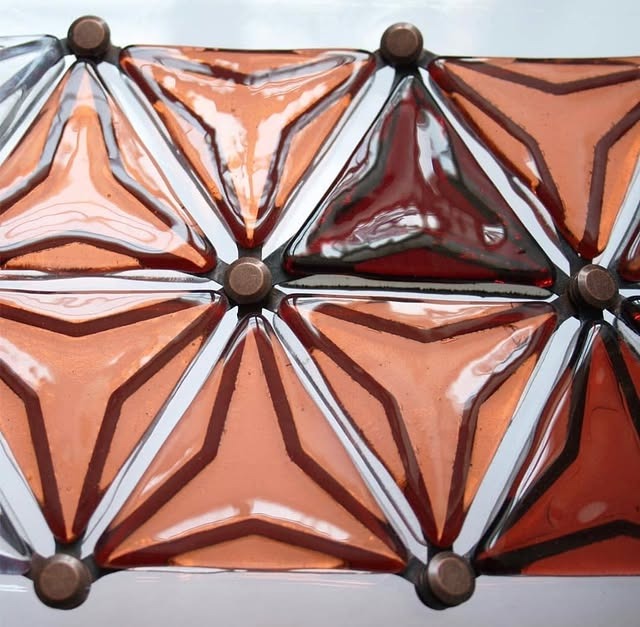
She doesn’t treat glass as a flat sheet. She sees it as a CMF surface that can move, adjust, and be tuned—something you can bend, layer, and build into a three-dimensional material system.
To make that possible, she developed a Modular Mesh System that combines glass and metal into mesh-like modules. These modules can be assembled into a surface that feels lightweight and jointed—almost like it has hinges.
The result is a surface where you can control how much light passes through it, and design reflection intentionally as well. Ultimately, it’s an attempt to make a building’s exterior feel like a living, responsive architectural skin. |
|
|
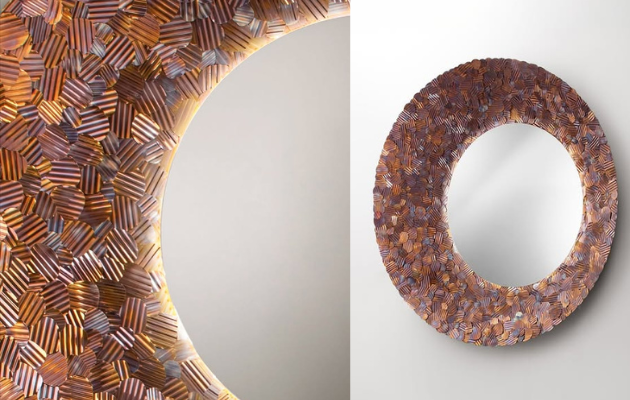
There are plenty of CMF examples where a hard material is translated into a softer, warmer sensory experience. Brame, finished with DeSequi, is one of them. It comes out of Evelina Antuono’s Ordita research: oxidation and shifting light create depth, and the reflections don’t read as flashy shine so much as a quiet mood—almost a narrative.
The key move is how the metal is treated like textile. The raised pattern looks like woven threads, so even though it’s rigid metal, it carries the feel of something alive—like fabric. In the end, it’s a strong example of turning a cold material into a warm, soft impression.
|
|
|
February 2 is Groundhog Day.
There’s even a famous movie with the same name (and yes—it’s a fun one).
Groundhog Day is a tradition where people look to a groundhog—a large, squirrel-like animal—to predict the weather. If the groundhog comes out of its burrow and sees its shadow, winter is said to last six more weeks. If it doesn’t, an early spring is on the way. It’s very much a believe-it-or-not kind of ritual, but many people in the eastern U.S. look forward to it every year and enjoy the excuse to start hoping for spring.
I used to think this was a one-town tradition, but it turns out there are quite a few participating groundhogs across the U.S. and Canada—around 30 to 40 of them. The most famous ones include Punxsutawney Phil in Pennsylvania, Staten Island Chuck in New York, Buckeye Chuck in Ohio, and Wiarton Willie in Canada. They’re famous enough to have full names.
This year’s results were split. Canada’s Willie didn’t see his shadow and predicted an early spring. In the U.S., Punxsutawney Phil and Massachusetts’ Mr. G did see their shadows—calling for six more weeks of winter.
So… who’s more accurate?
According to the National Oceanic and Atmospheric Administration (NOAA), U.S. groundhogs have an accuracy rate of only about 35%. Does that mean the Canadian groundhog has better instincts?
Meanwhile, here in California, it already feels like summer… 😅
(I turned on the A/C last week and this week.)
Either way—spring is coming. 🌱 |
|
|
|