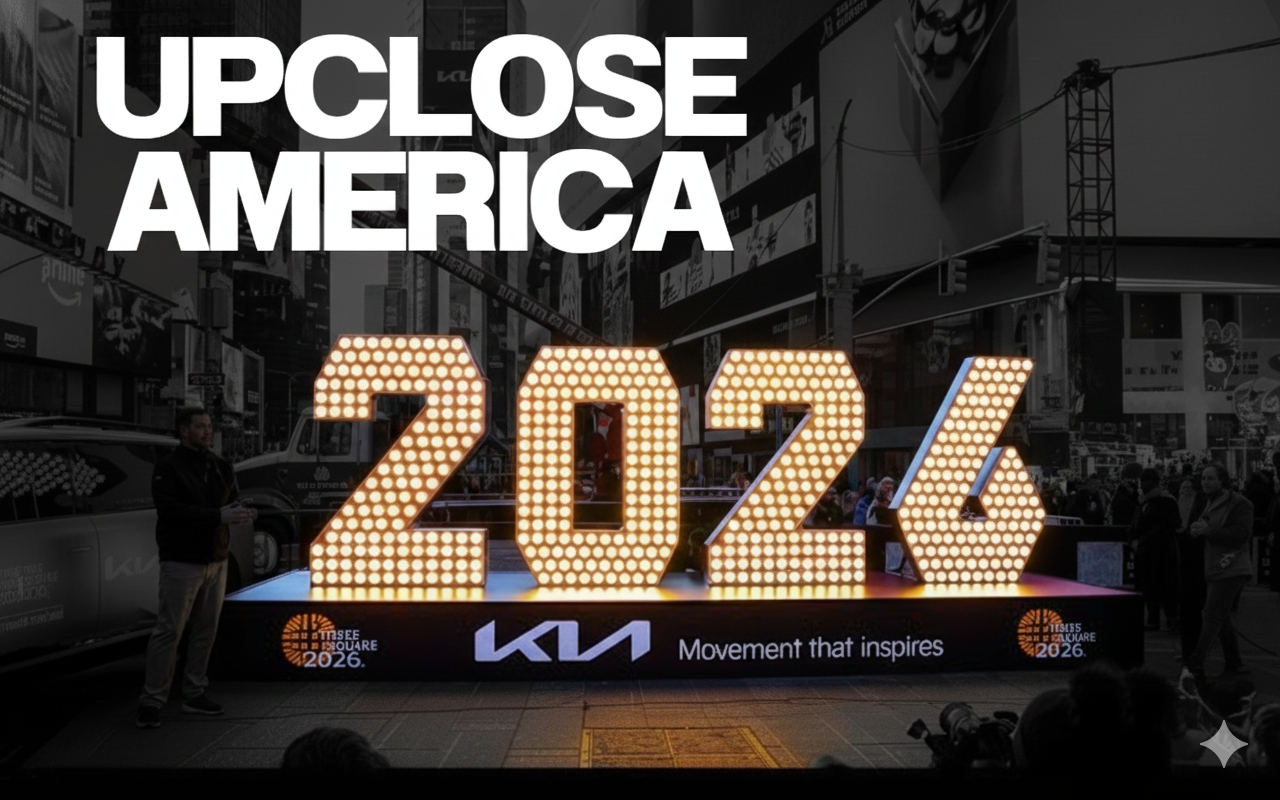
AI for real Estate Market / Big Ideas for 2026 Even though 2026 has just begun, people are still counting down and celebrating the end of 2025. “Joy” and “hope” are everywhere, and on TV all we see are people hugging and kissing. But after 20 years of watching CNN’s New Year’s Eve coverage, I still can’t forget one comment from Anderson Cooper.
He said something like this: “Some of you watching this broadcast tonight aren’t at a party. You might be alone, or you might be with someone you love — and you might still feel alone. I’ve volunteered to host New Year’s Eve for over 20 years because… when I was a kid, I was actually afraid of this night. On December 31, 1977, I was ten years old, watching the ball drop with my older brother Carter, while my father was in the hospital in very bad condition. That night, I watched all those people celebrating on television and felt more alone than I ever had. Five days later, my father passed away. Ten years after that, my brother died too.’
He went on to say that many people — even in the middle of crowds — feel isolated. You could be grieving someone you can never see again. You might have lost a loved one, your job, or something precious. In those moments of solitude, it can feel unbearable… but you are not truly alone. Wherever you are and whatever you’re feeling, someone else in the world is feeling it too — and in that way, we share it together.
In the U.S., January 1st is statistically one of the days with the highest rates of suicide. Broadcasters often acknowledge people watching alone, but this year’s message was stronger, pointing directly to those feelings. Many of us silently carry unresolved grief — it doesn’t show up in daily life, but during times like this, it becomes vivid.
Hearing Cooper’s story felt like listening to a message from my own childhood. It stirred something in me. For 2026, I decided this should be a year of looking inward, and also a year of being more mindful of those around us who are struggling. |
|
|
🏡 Real Estate’s AI Turning Point — No Broker Commission?
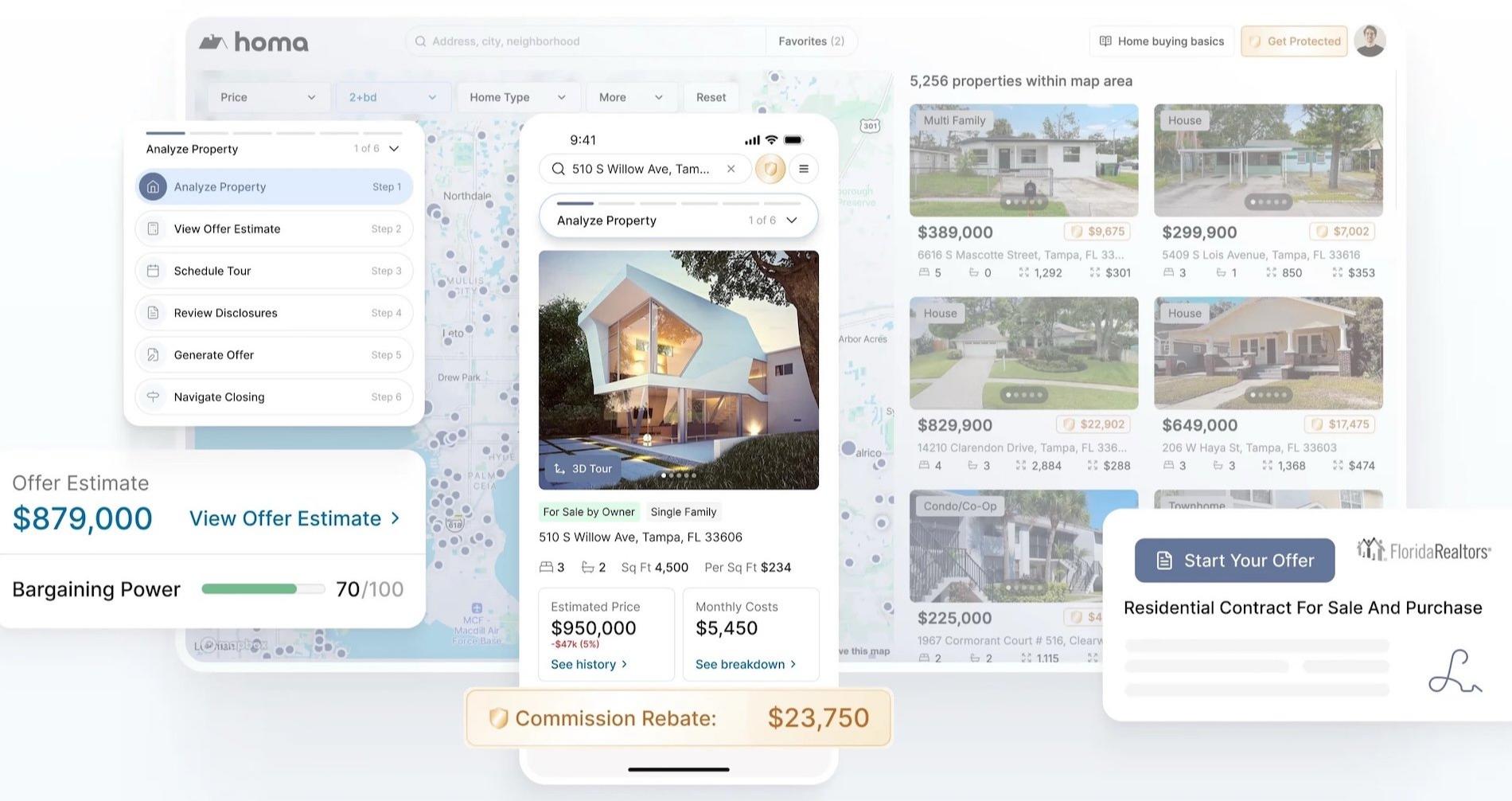
A new AI-driven real estate platform is getting attention — one that lets some homebuyers in Florida purchase houses without using a traditional real estate agent, and without paying the typical 2.78% commission.
The tech startup Homa offers an AI system that streamlines everything: home search, price comparisons, tour scheduling, and even contract preparation. Through this platform, a buyer in the Tampa Bay area reportedly saved $24,000 in agent fees.
Homa’s co-founder argues that most buyers already do extensive online research on homes themselves — so paying tens of thousands of dollars just to complete the transaction no longer makes sense. The platform aims for a fast, automated experience. There are both free and paid versions; the paid tier even introduces a human agent to assist.
Today’s real estate industry has been built on human broker commissions — but this shift shows that the commission-based model could face real disruption.
|
|
|
📈 Jenna's Insight
In both Korea and the U.S., buying a house carries many unexpected costs. Let’s say you’re buying a $900,000 home in California. With a 20% down payment ($180,000) and a $720,000 mortgage at about 6% interest, your monthly cost for the home itself — including principal, interest, property taxes, and insurance — would be roughly $5,295. That doesn’t include appraisal fees, loan origination charges, closing costs, and other up-front expenses.
In that context, eliminating the 2.8% broker commission isn’t just a small saving — it becomes a very real financial decision.
# AI’s role?
How we view the value of an agent matters. For simple transactions — like buying a newly built home with fewer unknowns — an AI platform could be a practical cost-saver. But the value a real estate agent brings is more than just cutting costs. Agents understand local market conditions, know how to negotiate, and can handle structural issues that arise in real transactions. AI hasn’t fully absorbed that on-the-ground expertise yet.
Despite the limitations, many buyers appreciate having more control over the process. Unlike a human who might say “no” or hesitate, the AI responds immediately and without judgment. It gives buyers agency in a process they’ve historically felt excluded from.
Whether this trend signals the end of the traditional broker model — or the start of a hybrid approach where humans and AI share roles — depends on how the housing market itself evolves. (🤔 Would I subscribe to Homa’s paid version? That’s a question worth exploring.)
|
|
|
2026 is shaping up to be a year of transition, where old frameworks and emerging systems intersect. AI is no longer a distant concept — it’s fully embedded in daily life. At the same time, climate challenges, social changes, and technological disruptions are reshaping how people live, work, and relate to one another.
Below are the five major areas to watch this year: |
|
|
1️⃣ AI in Daily Life — Beyond Automation to Emotional Support
-
Phenomenon: AI as everyday infrastructure, seamlessly embedded
-
Consumer Response: Automation / Emotion, authenticity, and humanity matter
-
Brand Role: Use AI to amplify human emotion and experience—not replace it
-
How: Position human premium as the core USP
AI will be ubiquitous by 2028 — not special, but infrastructure. The real question isn’t whether AI can automate tasks, but whether it can complement human judgment and emotional experience.
Forward-thinking companies will use AI not to replace people, but to enhance human emotional needs. Consumers today are highly attuned to authenticity. They’re watching to see whether brands use AI to just save time and money — or to genuinely improve decision-making and value.
|
|
|
# Case / Pininfarina × AC Future
This collaboration reframes mobility not as a machine, but as a living space—one designed to be inhabited, experienced, and interacted with. AI reads users’ daily routines and emotional states to dynamically adapt the environment, while Pininfarina’s design language softens cold technology with tactile and emotional depth.
The result goes beyond efficiency. It points to a future where technology doesn’t dominate human life, but instead restores our senses and aligns with the natural rhythm of living—a clear example of how AI can elevate, rather than replace, the human experience.
|
|
|
2️⃣ Sensory Reset — Reclaiming Real Human Experience
- Phenomenon: Sensory depletion and emotional numbness driven by screen overuse
-
Consumer Response: A growing desire to de-digitalize and seek tangible, real-world sensory experiences
-
Brand Role: Design experiences that reawaken the senses and prove physical authenticity
-
How: Sensory-led branding, artisanal-level quality, and design for repair, customization, and rest
As digital systems increasingly dominate everyday life, the most powerful innovation no longer comes from adding more technology, but from reawakening human senses. Seeing, hearing, touching, and feeling tangible reality is becoming a concrete business strategy.
For consumers who spend an average of 6 hours and 38 minutes online each day (GWI), craftsmanship and artisanal quality are being revalued as signals of trust and lasting value. Products designed to last, to be repaired, and to age well—along with experiences and services that help reset the senses—are emerging as real answers to digital saturation.
This year, competitive advantage will be defined not by how many features a product adds, but by its ability to restore human sensory balance.
|
|
|
# Case 1 / Koyia
Koyia, a Swedish fragrance brand, treats scent not as a simple consumer good but as a sensory bridge back to nature. Drawing inspiration from the forest, its fragrances are designed to reawaken the sense of smell. Deep within Sweden’s Småland forest, Koyia created a minimalist retail space where visitors can purchase a perfume valued at 599 SEK (about $65)—not with money alone, but by spending 10 minutes in quiet forest meditation.
The concept is rooted in research on the amount of time it takes for nature’s positive effects to register in the human body. By equating time spent in the forest with monetary value, Koyia reframes nature itself as currency. This approach expands consumption beyond transaction, turning it into an act of sensory participation and restoration—quietly prompting a deeper question: what do we truly value? |
|
|
# Case 2 / Yue Kitchen
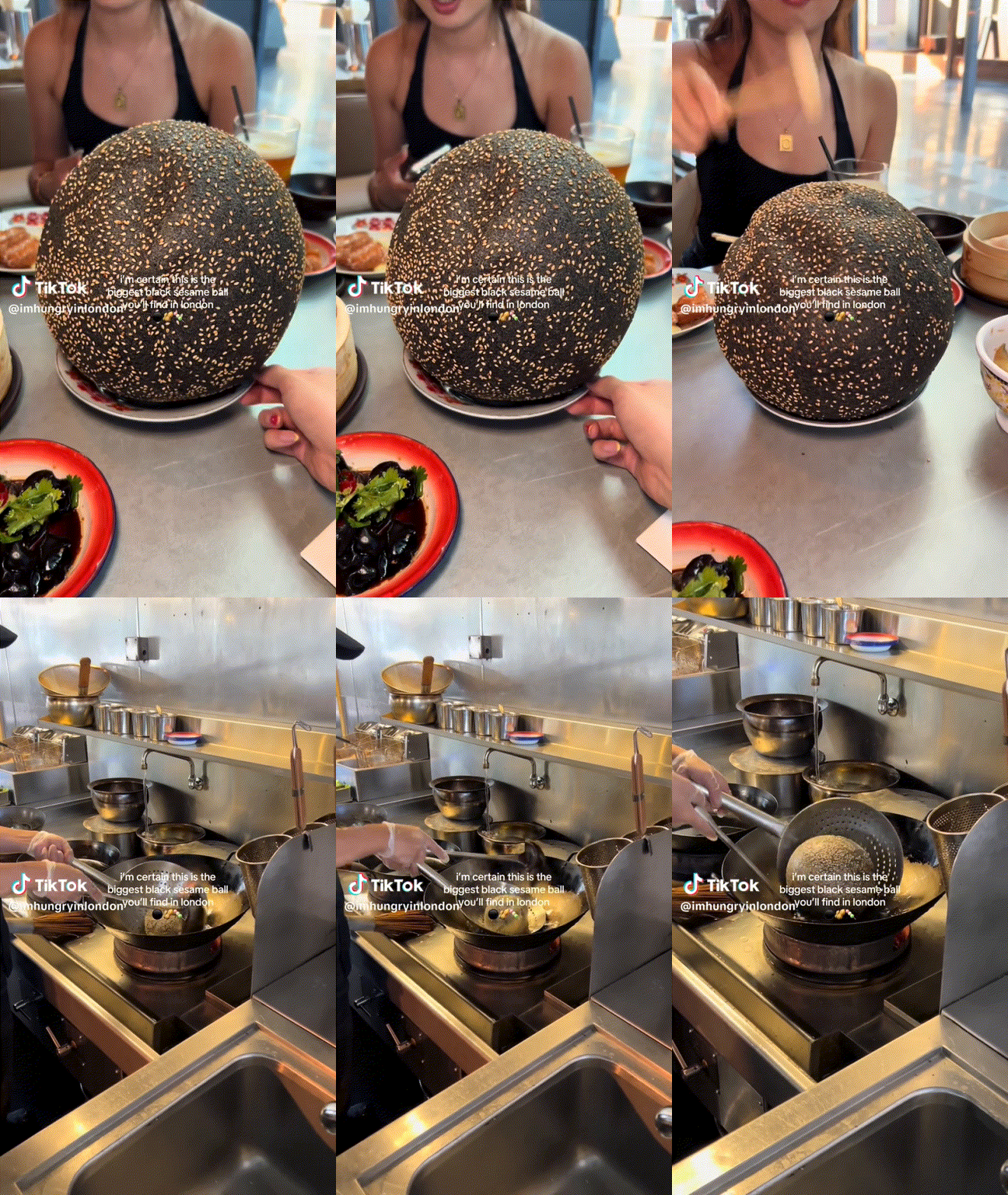
Yue Kitchen, a London-based restaurant, expands food beyond something merely eaten into something actively experienced. One of its signature dishes is a jumbo black sesame ball that guests must crack open themselves with a small hammer at the table. The sharp sound of impact, the tactile resistance of the shell, and the sudden visual reveal transform the first moment of the meal into a deliberate performance.
By requiring action before taste, the dish shifts dining from passive consumption to a multi-sensory act of participation. Yue Kitchen’s approach reframes how food is remembered and shared, creating a moment where how you experience a dish becomes more meaningful than what you eat. |
|
|
3️⃣ Climate Impact
-
Phenomenon: Everyday life destabilized by climate change
-
Consumer Response: Demand for practical solutions that can absorb climate shocks immediately
-
Brand Role: Design with measurable ROI for climate adaptation
-
How: Build climate resilience and predictive, proactive response systems
Recent record-breaking floods across California made one thing unmistakably clear: climate change is no longer a distant headline—it’s a lived reality. When sudden downpours shut down roads and bring daily life to a standstill, people stop asking why this is happening and start asking who will fix it.
For brands, what matters now isn’t ambitious pledges or abstract sustainability narratives. It’s whether products and services can continue to function reliably even as weather conditions become more extreme. In the years ahead, the brands that earn trust won’t be the ones explaining climate change—they’ll be the ones quietly ensuring people feel its impact as little as possible.
|
|
|
# Case 1 / OYIKA
In Southeast Asia, where electric two-wheelers are rapidly gaining adoption, OYIKA solves a key mobility friction point by replacing charging with battery swapping. Instead of waiting for a recharge, riders simply exchange a depleted battery for a fully charged one—eliminating downtime and the need to depend on charging infrastructure.
OYIKA’s battery-swapping stations, deployed across Thailand, Indonesia, and Cambodia, are designed to keep mobility moving even in regions with unstable power grids. Its battery-as-a-service subscription model highlights a critical insight in the expansion of electric mobility: the real differentiator isn’t the technology itself, but resilience—making sure users never feel the crisis in the first place.
|
|
|
# Case 2 / Blue–Green Infrastructure in Bangkok
Long challenged by frequent heavy rains and flooding, Bangkok is reshaping its urban response through blue–green infrastructure—integrating parks, rooftop farms, and water-retention spaces into the fabric of the city. Some parks are intentionally designed to flood during storms, naturally storing rainwater, while in everyday conditions they function as green spaces that help reduce urban heat.
Projects led by landscape architect Kotchakorn Voraakhom move away from traditional flood-control systems reliant on concrete embankments and drainage channels, offering an alternative that works with natural water flows instead. Bangkok’s approach shows that urban resilience doesn’t have to start with massive infrastructure projects—it can begin with everyday spaces designed to coexist with water. |
|
|
# Case 3 / Mars × Pairwise
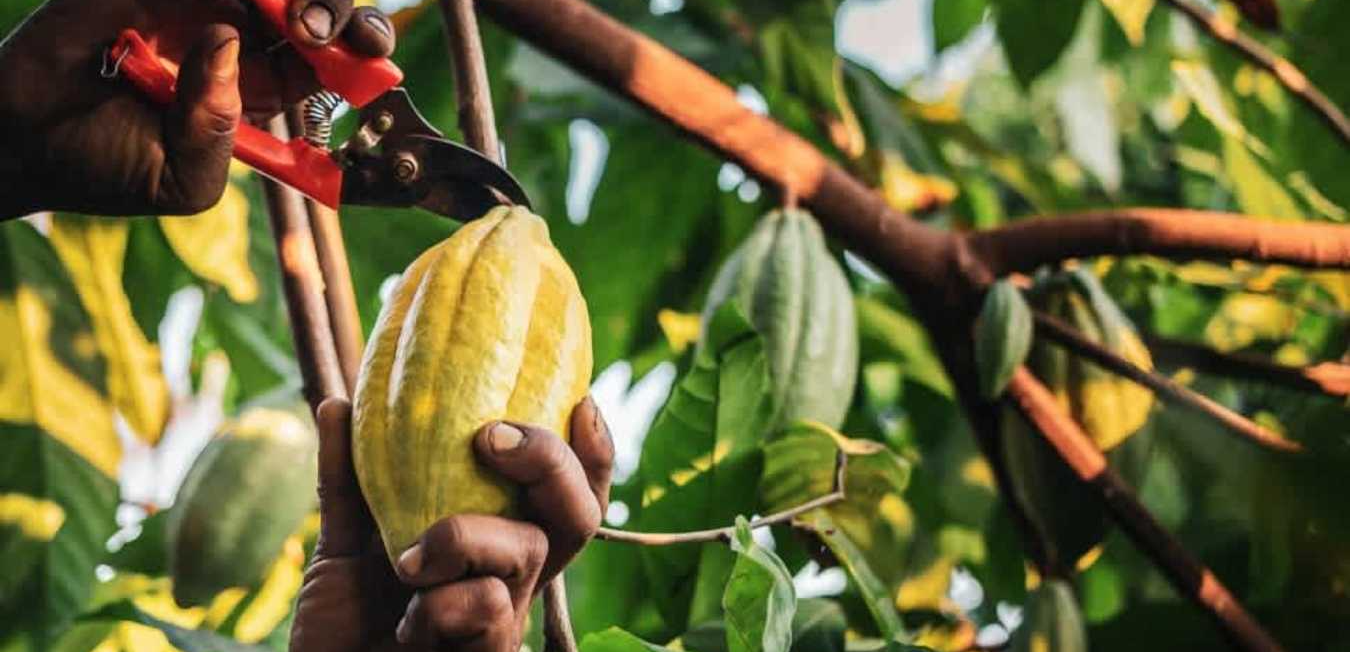
As climate change makes cacao farming increasingly difficult, Mars is partnering with U.S.-based biotechnology company Pairwise to develop more climate-resilient cacao varieties. By breeding plants that can better withstand heat and disease, the collaboration aims to protect farmers and stabilize the cacao supply chain.
This case shows that climate response doesn’t have to feel abstract or distant. It can take the form of practical preparation—quietly ensuring that familiar products people enjoy today remain available tomorrow, even as environmental conditions continue to change. |
|
|
4️⃣ Connectivity Amid Chaos
-
Phenomenon: Ongoing disruption and collective fatigue
-
Consumer Response: Selective engagement
-
Brand Role: Act as a filter and curator, not a broadcaster
-
How: Simplify decision-making, provide stability, and offer play-based escape routes
In 2026, consumers are carrying deep fatigue—from climate anxiety and financial uncertainty to war and political tension. As a result, many are shifting toward selective engagement, actively choosing what news, platforms, and conversations they allow into their lives.
In this environment, a brand’s role is not to add more messages, but to reduce noise—to function as a trusted filter and curator that helps people connect when they want to, and step back when they need to rest. With choice overload now the norm, simplified product assortments and clear, restrained communication have become essential strategies for easing decision fatigue.
Beyond that, brands are increasingly expected to serve as sources of stability and reassurance—while also offering small, playful forms of escape and belonging. Through thoughtful curation, focused engagement with meaningful issues, long-lasting communities, and achievable micro-goals, brands can give consumers both direction and relief in an otherwise overwhelming world.
|
|
|
# Case 1 / IKEA – 'Do It at Home'
Through its “Do It at Home” campaign, IKEA redefined the home not as a perfectly styled space, but as a stage for experimentation, play, and personal freedom. Instead of highlighting flawless interiors or professional expertise, the campaign encouraged people to solve everyday problems using items they already own—or can easily find at IKEA.
Rather than offering a single “right” answer, the campaign celebrated trial and error, lowering psychological barriers with a simple message: it’s okay to be imperfect. By positioning its products not as finished solutions but as tools that extend individual creativity and passion, IKEA returned the home to what it can be at its best—a place where people feel free to try, adapt, and explore again.
|
|
|
# Case 2 / AG1 – Sleep Campaign
AG1 used a playful parody of an “adults-only hotline” to highlight sleep deprivation as a very real, very grown-up problem. By borrowing the familiar format of a late-night call line, the campaign struck a humorous tone while building instant relatability—making exhaustion feel acknowledged rather than medicalized.
The approach allowed AG1 to naturally position its product as a support system for adult sleep and recovery, reinforcing the message without sounding preachy. By blending humor with empathy, the campaign showed how serious issues can be addressed in ways that feel human, approachable, and culturally fluent.
|
|
|
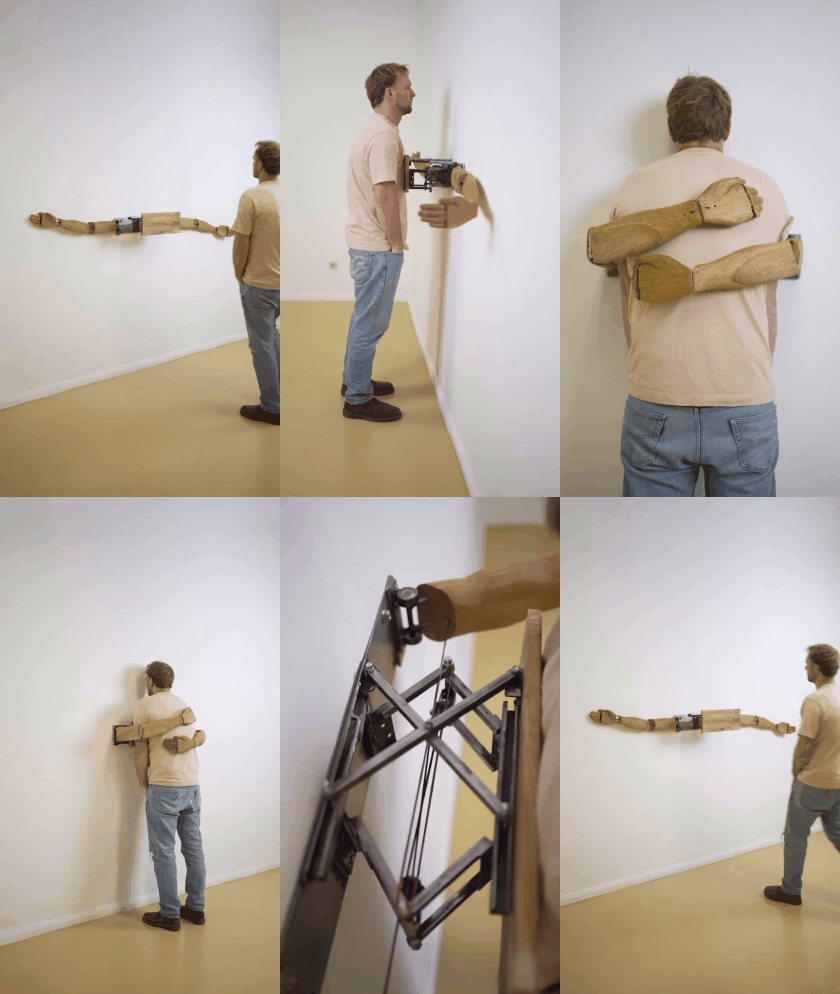
#Bigstronghug
German sculptor Jakob Grosse-Ophoff creates kinetic works that translate human gestures and emotions into mechanical movement using wood, metal, and simple motors. In Hugger, a wall-mounted wooden structure extends like arms, wrapping around the viewer. When you step forward, the mechanism tightens gently around your torso, offering what can only be described as a mechanical embrace.
There is no human body here, no warmth in the materials themselves—yet the experience is unexpectedly tender. Perhaps it’s because the act of being held, of fully yielding your weight to something else, touches something deeply emotional. Being embraced is not a neutral gesture; it reaches straight into our most vulnerable instincts.
Over the past year, many people have left this world—some to places we can never reach again. We pass up countless chances to hold one another, and only realize their value once the possibility disappears. Before life makes those moments impossible, we should hold more often. Lean in. Stay a little longer. Touch gently.
Memories of touch can shape a person for a lifetime.
If this sculpture were translated into a Korean context, would it come with an added “it's okay, it's okay” pat —built into the hug?
|
|
|
Kia Design Center America
Jenna Chwee
|
|
|
|
|