#269 / Confidential
Anyone who's ever bought a new car in America knows exactly what I'm talking about. The moment you walk into a dealership showroom, the psychological games begin — they offer you a coffee, get you comfortable in a seat, casually steer the conversation toward monthly payments, and hit you with "this price is only good today" to make you feel like you're running out of time. You see every move coming, and it still works on you. Turns out, that's not just a "me" problem.
or younger buyers, though, this whole experience goes beyond just being unpleasant — it's become a genuine psychological barrier. Studies show that 81% of millennials need to mentally psych themselves up before making a phone call, and 75% would prefer a phone that only does texting over one that requires voice calls. In fact, 38% of millennials say they prefer texting specifically because phone calls make them anxious. It's called telephonophobia — the fear of phone calls. Now imagine that call involves haggling over price with a pushy stranger at a dealership. The anxiety practically doubles.
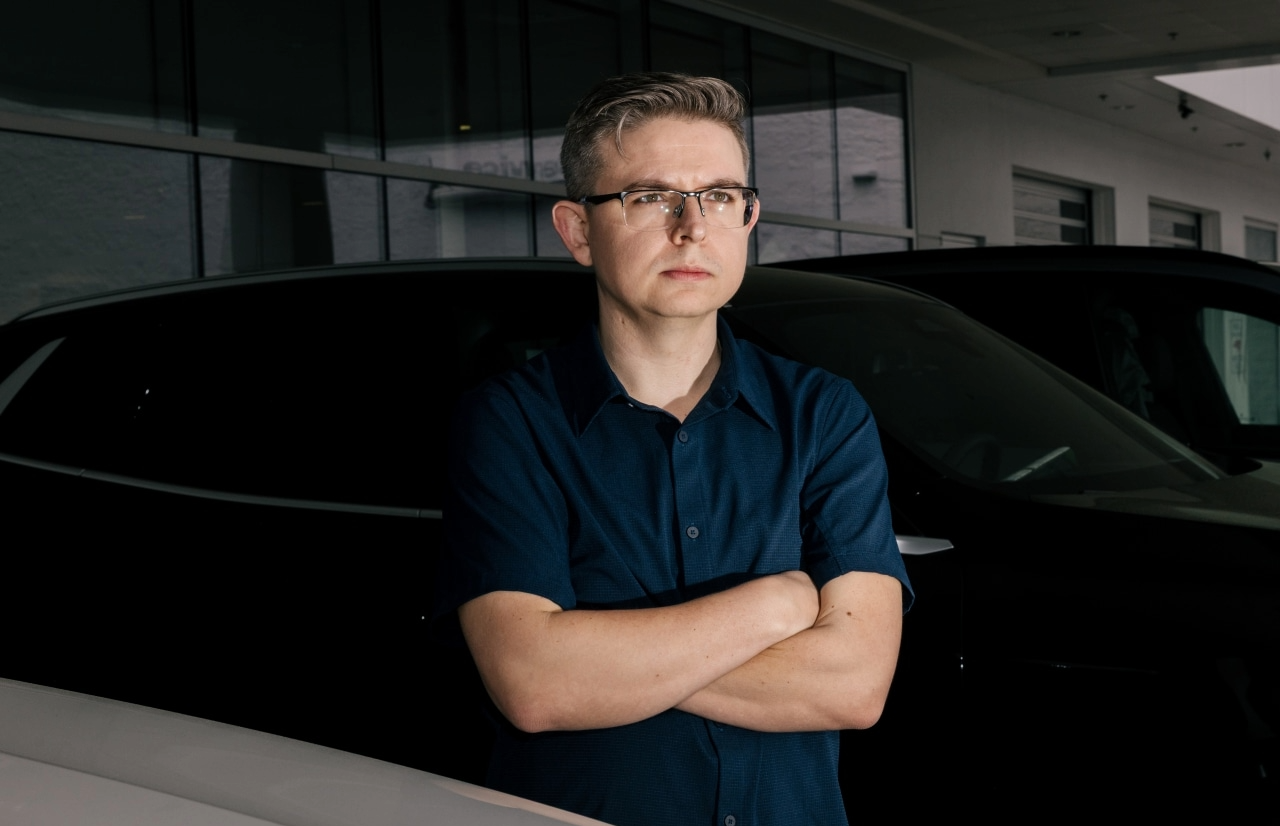
That's exactly the gap that 33-year-old Tomi Mikula decided to exploit. After more than a decade selling cars and auto financing at dealerships, he switched sides — now he negotiates on behalf of buyers. His company, Delivrd, charges a flat $1,000 per deal and uses insider knowledge of dealer-speak and inventory data to drive prices down. He currently has a team of five professional negotiators and is pulling in around $200,000 a month in revenue.
|
|
|
What makes it even more interesting is that he live-streams his negotiation calls on TikTok and YouTube. A 27-minute video where a dealer called him a liar racked up 600,000 views, and he's now sitting at 600,000 followers. As dealerships have started recognizing his voice and hanging up — or refusing to take his calls altogether — he's reportedly looking into using a voice changer to stay one step ahead. It's a world where car-buying negotiations become content, and that content loops right back into the business. |
|
|
Step back and look at the bigger picture, and this isn't just a feel-good story about one guy's hustle. The real question is: why did someone like Tomi Mikula need to exist in the first place? Because the car-buying process is still built entirely around the dealer. According to Edmunds, as of late last year, one in five new car buyers in America is carrying a monthly payment of $1,000 or more — the highest share ever recorded. And roughly 40% of Americans report having buyer's remorse after purchasing a car. We live in an age of infinite information, so why does sitting across from a dealer still feel so disarming?
That's what makes Tesla's no-dealership model worth a second look. From the start, Tesla rejected the information asymmetry baked into the dealership structure — fixed pricing, direct online sales, no negotiation. It's a system specifically designed so that someone like Tomi Mikula would never need to exist.
As AI matures and millennials become the dominant consumer force, the Tesla model is likely to spread well beyond cars — into insurance, real estate, mortgages, and healthcare. In the end, Tomi Mikula's rise is a signal flare. It's consumers saying they're no longer willing to tolerate information asymmetry — and that they'll pay someone to fight for them if they have to. (Honestly? Same here....)
|
|
|
📱 From Accessibility Design to the Mainstream
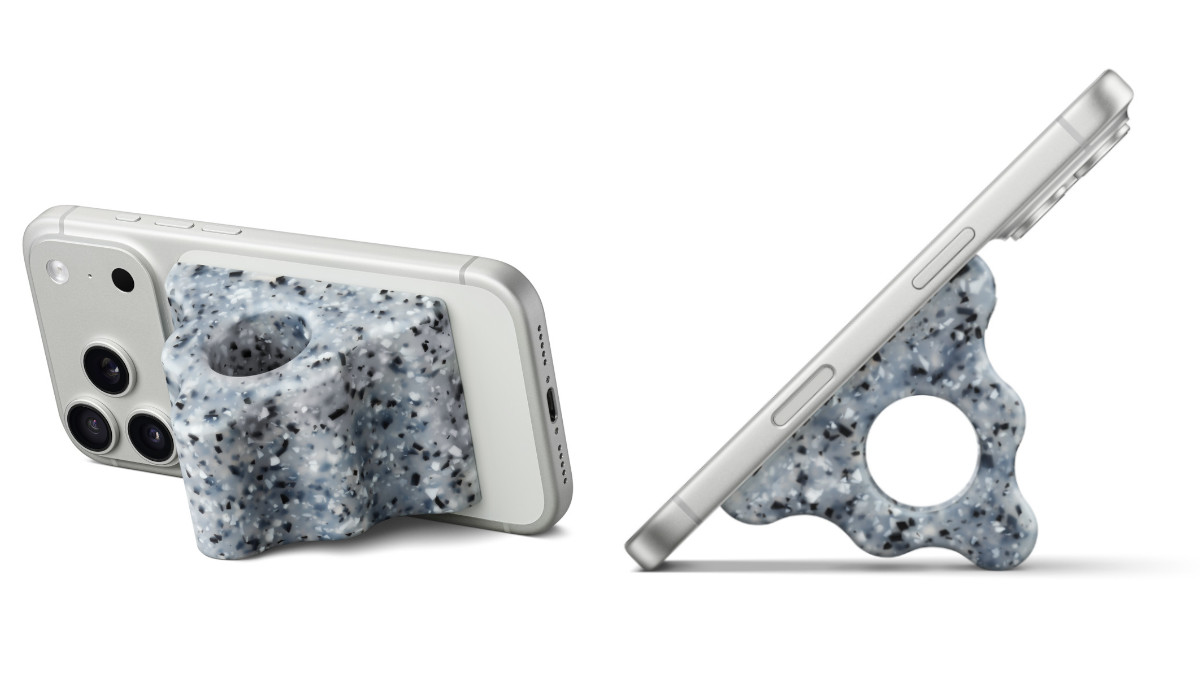
LA-based artist Bailey Hikawa designed an Apple MagSafe phone grip that sold out almost instantly — despite a $70 price tag. Why?
# A Rethink, Not an Add-On
Built from interviews with people who have limited hand strength or tremors, this wasn't designed by tacking something onto an existing product. It started from scratch with one question: what's the most comfortable way to actually hold this thing? The result is non-slip, and doubles as a kickstand that props up at any angle — horizontal or vertical.
# Gallery-Worthy Color and Recycled Material
The two colorways — Chartreuse and Crater — carry the same visual language as Hikawa's gallery work. There's none of the flat, clinical aesthetic that typically follows accessibility products around. It just looks like something you'd want. |
|
|
📈 Jenna's Insight | Designed for Disability? vs. Designed for Everyone
Before the phone grip, Bailey Hikawa had designed all kinds of products — including custom Toilet Seat Covers — that made a real difference for people with disabilities. But what he was always focused on wasn't solving problems for disabled users specifically. It was solving problems for everyone. That's exactly why the Apple Grip sold out.
The iPhone's famously sleek design also makes it notoriously slippery — and a slippery surface isn't just a problem for people with limited grip strength. It's everyone's problem.
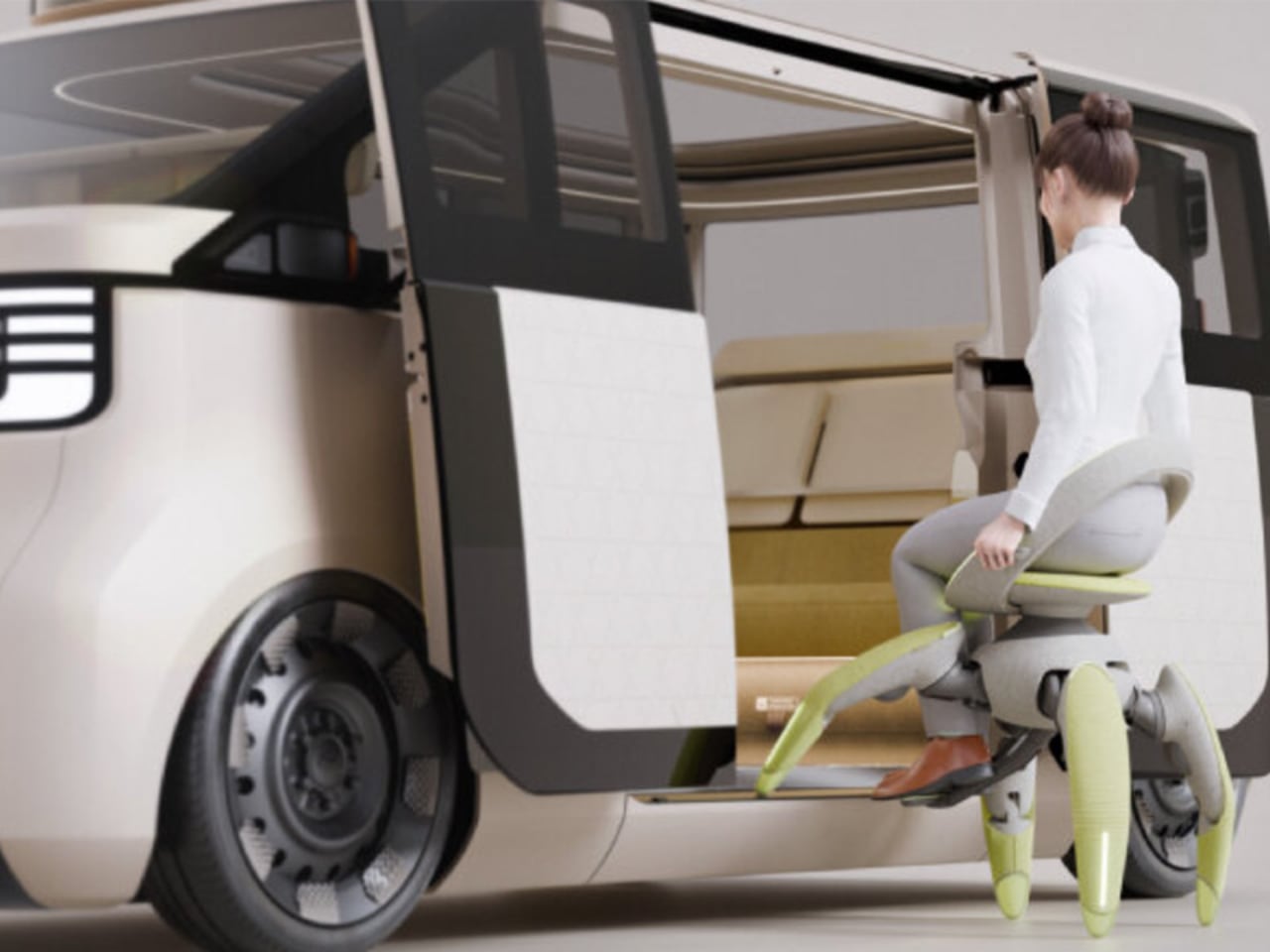
Toyota's "Walk Me" concept, unveiled at last year's Tokyo Mobility Show, follows the same logic. The project explores designs that let people board from the side of a wheelchair rather than the rear — a response to Japan's aging population. Because struggling with stairs isn't just a wheelchair user's challenge. In an aging society, it's eventually everyone's challenge.
The examples have been hiding in plain sight. OXO's Thick-handed Peeler was created for people with arthritis — now it's a kitchen staple. Subtitles were built as an accessibility feature for the deaf and hard of hearing — now everyone uses them to watch videos on mute at a coffee shop.
This is what good accessibility design actually looks like. It doesn't carve out a separate lane for a specific group of users. It finds the problem underneath the problem — and solves it for everybody.
|
|
|
When Toyota's Walk Me was first revealed, the reaction wasn't "wow, what a great product for disabled people." It was "I want that." Robotic legs climbing stairs, autonomously boarding a car — that was the moment that captured people. That was the point.
The Apple Grip is no different. That Chartreuse colorway, the sculptural form — it just looks desirable. We may be entering an era where accessibility-driven products no longer carry that faint air of pity or utility. When you design with a wider range of bodies in mind from the very beginning, what you end up with is something everybody wants. |
|
|
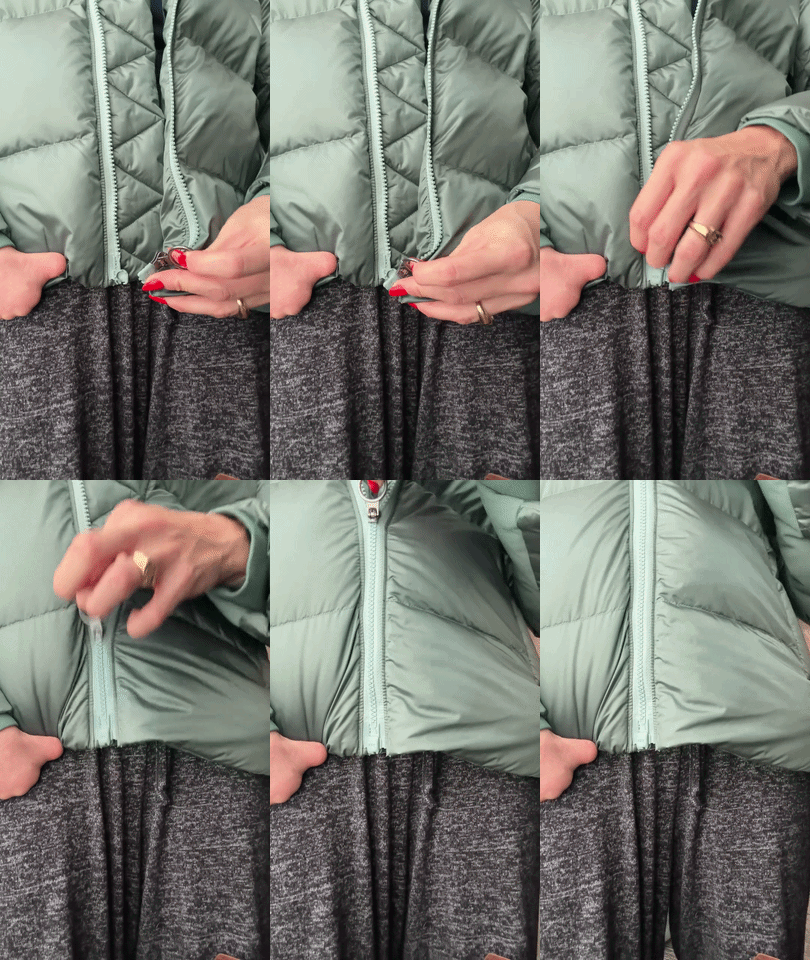
Perhaps the most perfect example is Lululemon's magnetic zipper, designed for the Paralympic Games. Built to open and close with just one hand, it started as a detail for Paralympic athletes — but it's just as useful for anyone juggling bags, wearing gloves, or simply trying to zip up without a free hand. From tall women wearing men's cuts to kids — one small design decision becomes an answer for more bodies than it was originally imagined for.
#AccessibilityIsAStartingPointNotAnAddOn #DesigningForMoreBodiesMakesBetterDesign #UniversalDesignIsBecomingABrandLanguage |
|
|
🚗 Low-Tech Cantilever: Subtraction Is Also Design
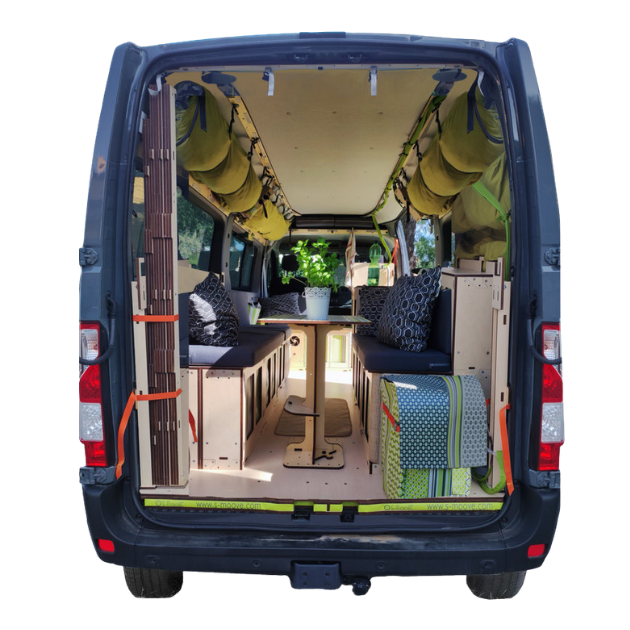
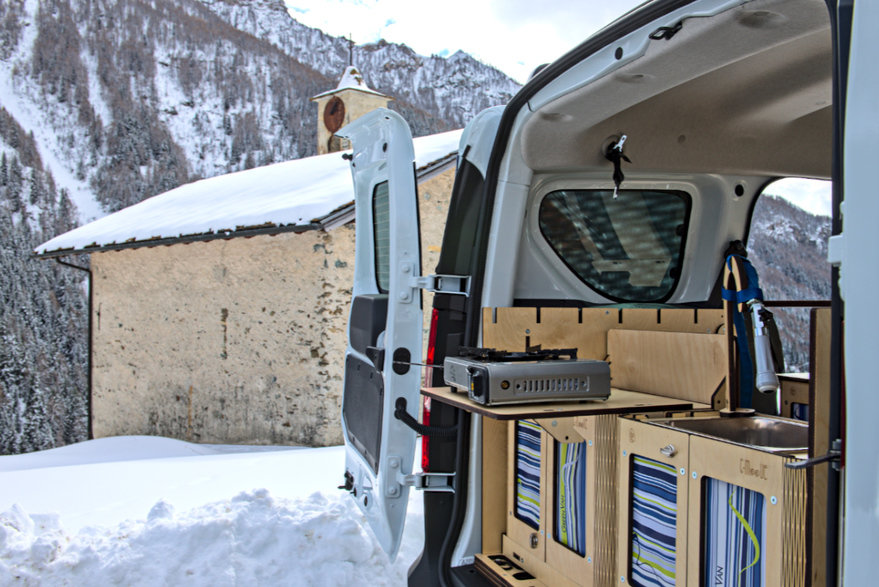
Italian company S-Moove makes a plywood furniture system for the van life crowd. Their recently revealed cantilever design is genuinely clever — and might just be the ultimate example of spatial efficiency done right.
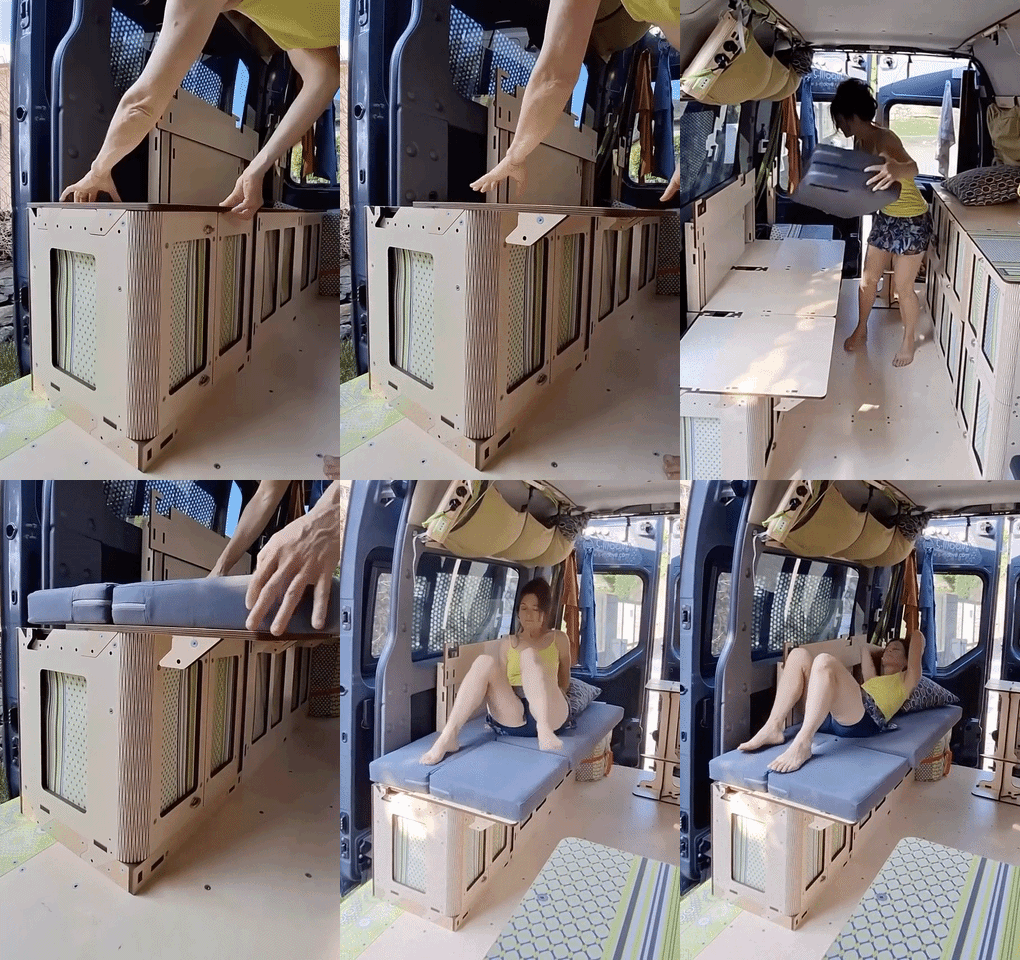
A cantilever — one end fixed, the other floating in mid-air — typically demands hidden brackets, metal reinforcement, and careful load calculations. S-Moove solved it by simply sliding plywood into slots. No extra hardware. No power tools. The result is a multi-functional island and sleeping setup tucked into the tight confines of a cargo van.
|
|
|
1. In and Out — Expandability That Feels Like Magic
Think of it like the Hummer EV's removable roof panels - on demands, What looks like a clean, compact kitchen island at first glance reveals a full-sized dining table when you pull out the lower frame. Maximum utility, zero visual clutter when you don't need it.
2. All-In-One Storage and Function
It's not just a table. Built into the body: a wine rack, knife holder, and dish drying rack — all hidden until you need them. Before anything is pulled out, the surface reads as completely clean. Visual noise, eliminated.
3. Minimalism at Its Purest
The wood-and-metal combination plays well with virtually any space or interior style. The no-frills, straight-line silhouette makes the room feel larger than it actually is — which, in a cargo van, isn't a nice-to-have. It's everything. |
|
|
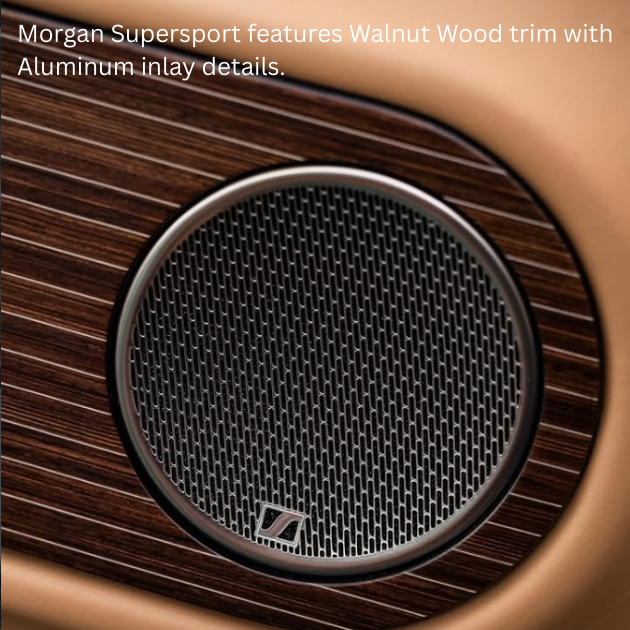
The design would hit a whole different level with walnut trim and aluminum inlays — think Morgan Super Sport interior vibes. Obviously that comes with a price tag conversation, but as a premium tier? It writes itself. |
|
|
🌈 Color That Refuses to Stay Still — Felipe Pantone's Material Philosophy
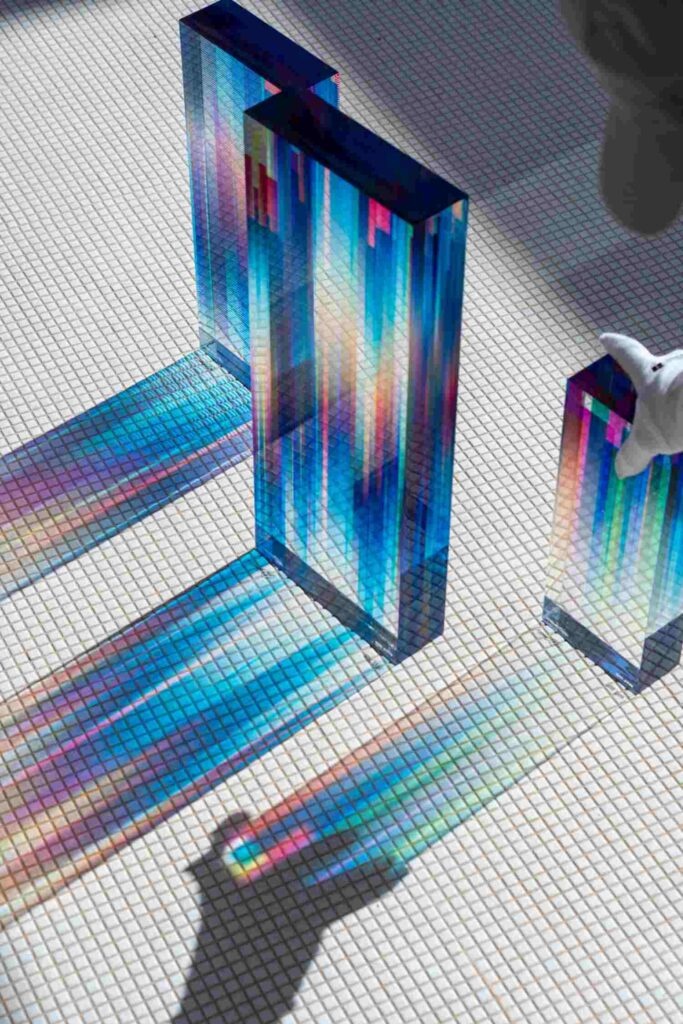
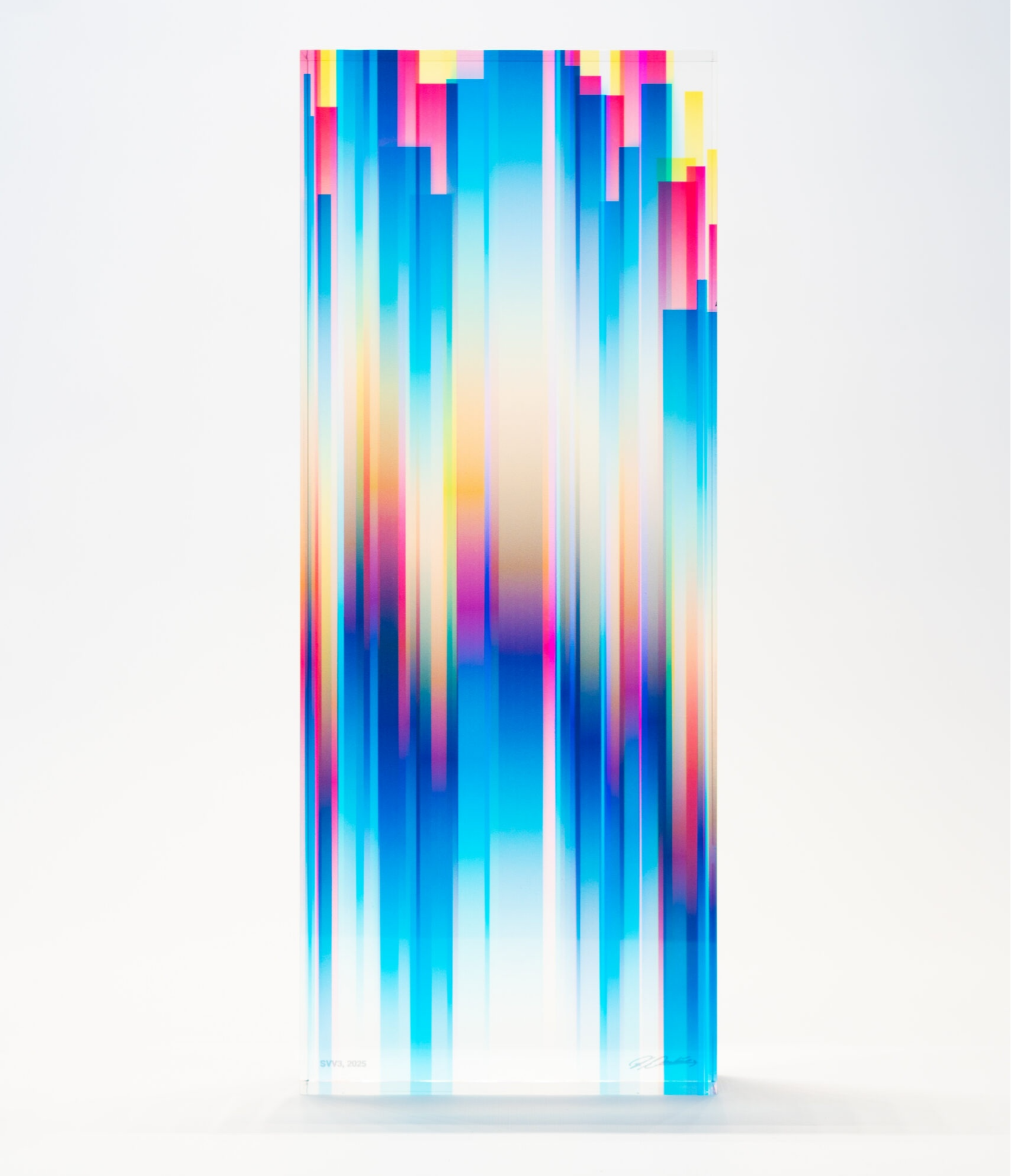
Felipe Pantone's Subtractive Variability Vitreum uses no paint, no coating. It's a single sheet of resin that shifts color depending on the angle you're looking from. The light and the viewer's gaze create the color — the material itself doesn't hold it.
It raises a quiet but pointed question: is the right move to choose a color, or to design the conditions for one? This piece feels like a material answer to exactly that. Through the interplay of light and viewer perception, the work opens up an infinite field of chromatic variation — no two moments quite the same.
|
|
|
🐴 When a Car Interior Becomes Haute Couture
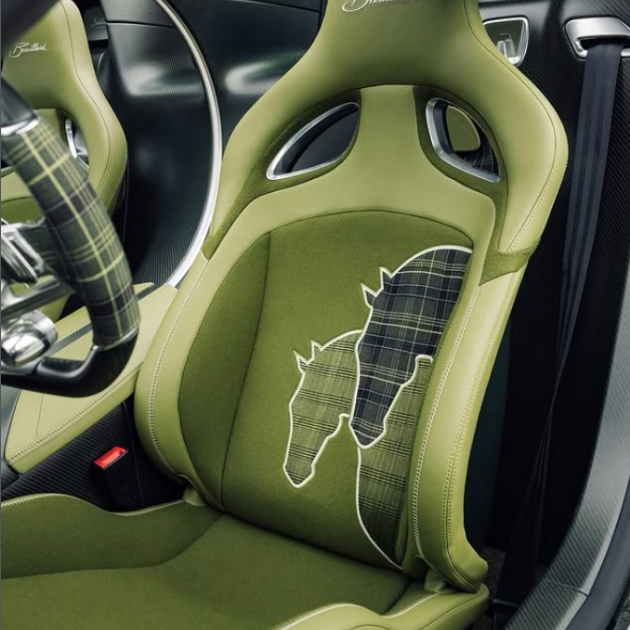
The Bugatti Brouillard W16 is built for exactly one person. The photos say it all — horse silhouettes stitched directly into the seat leather, tartan fabric lining the background, a hand-carved horse figurine on the gear knob, and a specially commissioned tartan textile from Paris that pulls the entire interior into a single coherent vision.
In other words: a fashion house making one dress, from scratch, by hand. Except it's a car.
From a CMF design perspective, what's worth paying attention to is how olive green leather and tartan — a combination that has no business working — somehow doesn't clash at all. The reason is that every material is connected through a single narrative thread: the horse. Rather than letting individual materials compete for attention, the design reflects an entire worldview through the coherence of story and surface. Nothing is accidental. Nothing needs to announce itself.
|
|
|
🍀 An Emblem That Carries All of Naples
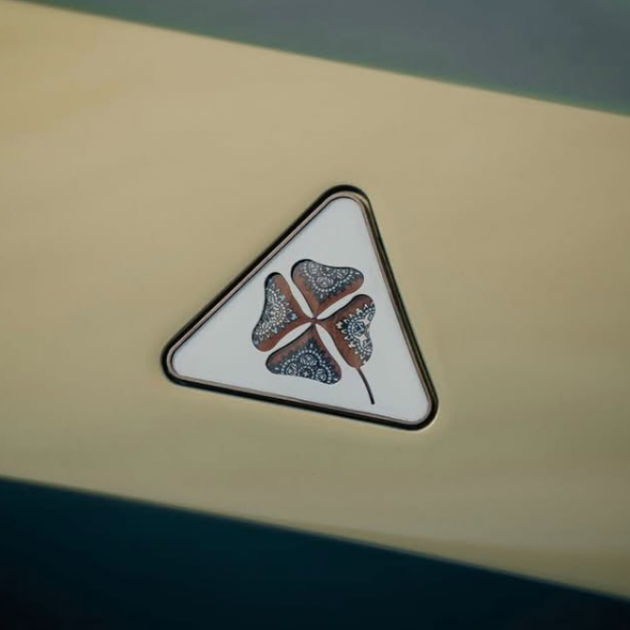
The Totem Automobili GT Super Marinella is a special edition built in collaboration with E. Marinella — Naples' legendary luxury tie maker. That clover emblem in the photos isn't just a badge. Marinella's signature paisley pattern is intricately engraved into it, and what it's really doing is translating the DNA of Neapolitan craft culture into automotive language. True to Totem's dual pursuit of performance and craftsmanship, the brand's identity speaks loudest in its smallest detail.
From a CMF perspective, it's a strong case for the emblem as more than an identifier — as the primary vehicle for brand storytelling.
|
|
|
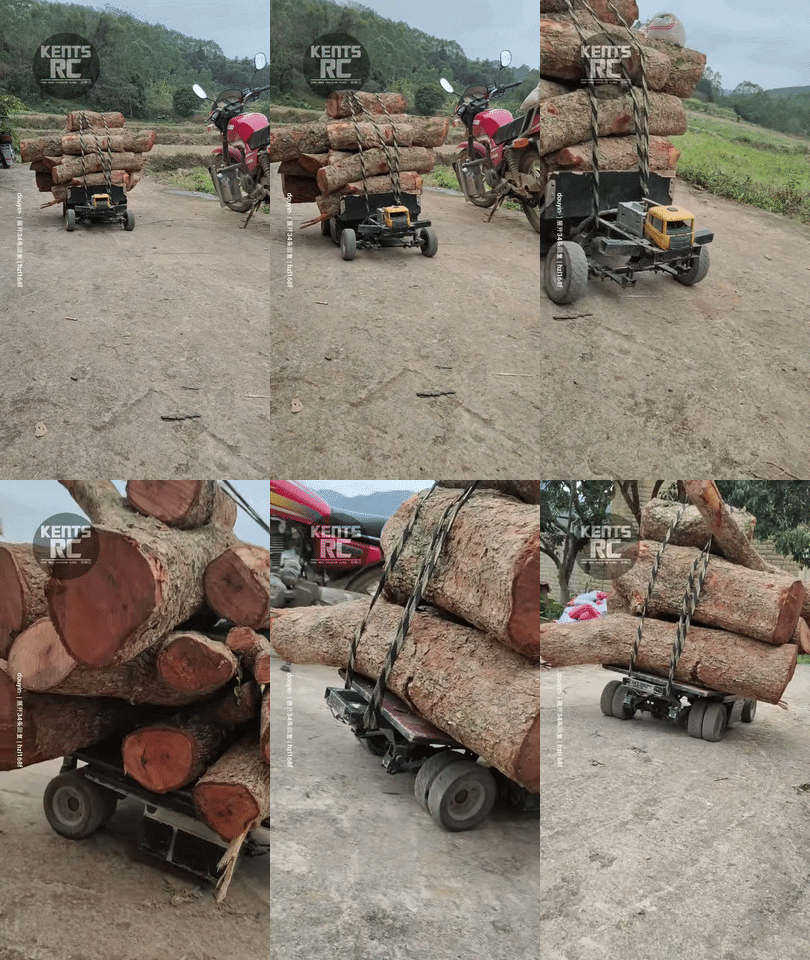
Kent's RC is a creator running across Instagram, TikTok, and YouTube, known for high-powered 1/6 scale RC car content. The focus is almost exclusively on off-roading and trail crawling — pushing scale models through rough terrain in ways that are genuinely hard to believe. The power these things put out is no joke. We're talking hauling heavy log sections without breaking a sweat — |
|
|
— delivering groceries with a 1/6 scale 18-wheeler — |
|
|
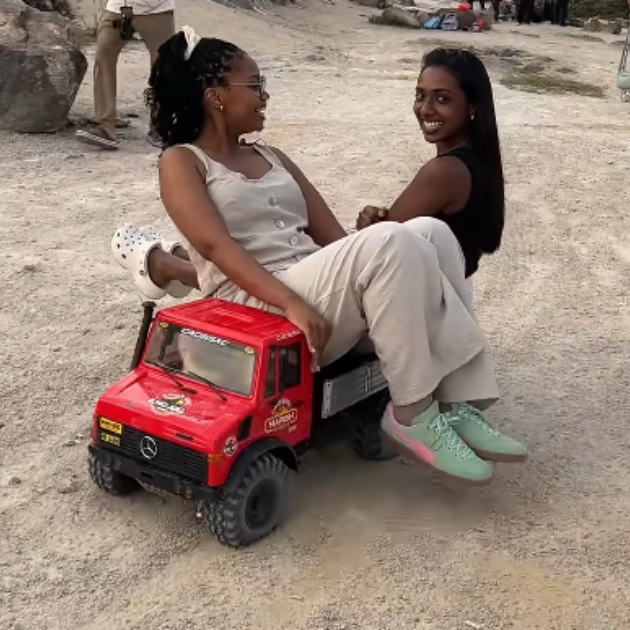
— and even hauling an actual person using an EMO XL 6X6 6WD RTR 1/8 scale crawler. |
|
|
Most recently, he even pulled a sled across the frozen Songhua River in Harbin, China. At this point, it's hard not to wonder — RC-powered rickshaws cruising down city streets might not be as far off as we think! 😄 |
|
|
Kia Design Center America
Jenna Chwee
|
|
|
|
|