Yom Kippur/Amazon Pharmacy/Dacia Hipster/Dart Dron/Robots Los Angeles has the second-largest Jewish population in the United States after New York, with about 520,000 residents. Whenever I go downtown, I often see Jewish synagogues like Wilshire Boulevard Temple and restaurants serving Jerusalem-style cuisine.
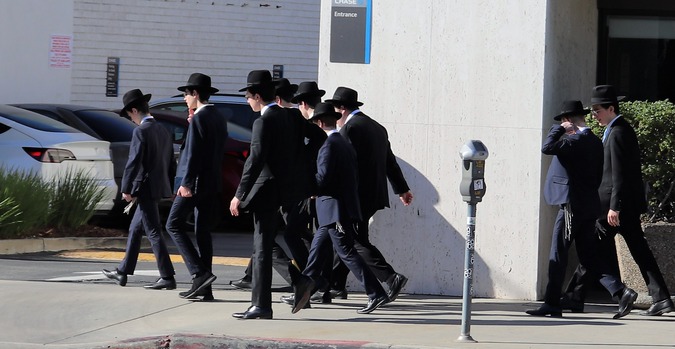
Sometimes, when passing through the Hancock Park area, you’ll spot groups of people walking to the synagogue dressed in distinctive traditional clothing. Why is that?
On the Jewish Sabbath (Shabbat) and Day of Atonement (Yom Kippur), all forms of work and kindling fire are prohibited. Even using electricity—like turning on a light switch—is not allowed. To avoid this, some remove the fridge light bulb beforehand or set electrical devices to run automatically during the Sabbath. Cars are also avoided, since igniting fuel with a spark is considered “kindling fire.” That’s why observant Jews walk to their destinations, and in some parts of Los Angeles, certain elevators are programmed to stop at every floor automatically so no button needs to be pressed. |
|
|
Well, that much is easy to understand.
This year, Yom Kippur, the Day of Atonement, was observed from October 6 to 8. During that period, devout Jews refrain from doing any kind of work—so what do they do when something urgent comes up? 😄 They ask their neighbors for help.
There’s a Korean resident who lives in the middle of a Jewish neighborhood, and every Yom Kippur, she says she gets flooded with requests from her Jewish neighbors. And some of the requests are quite amazing.
They might ask her to press the button on the washing machine because they need to do laundry, or to turn on the heater because it suddenly got cold. The most extreme cases involve the strict dietary laws of Kosher. Since food waste must be separated into meat, grain, and dairy categories, some households even have as many as eleven food waste bins! (If an egg touches meat, the whole thing must be thrown away, according to Kosher law.
These are the so-called Orthodox Jews, known for their strict adherence to religious rules.
If many Orthodox Jews lived in my neighborhood, I probably could’ve made some side money by putting up a sign saying,
“Switch and device operation service — $20 per request.” 😆
Interestingly, the number of Reform Jews—those who follow less strict interpretations—has been increasing in recent years.
At this rate, with self-driving cars becoming more common, it may not be long before people can ride to the synagogue on the Sabbath. (After all, electric cars don’t spark, so maybe that wouldn’t count?) |
|
|
💊 From Diagnosis to Pickup: How Amazon Pharmacy Designed for “Instantness”
For many American moms, the scariest words might just be, “Mom, I don’t feel well.”
In Korea, seeing a doctor and getting a prescription filled can take as little as 30 minutes. But in the U.S., even for a simple cold, the whole process—from doctor’s visit to receiving medication—often takes three to four hours.
You wait 30 minutes to an hour just to check in at the clinic. Then another 30 minutes in the exam room before seeing the doctor. After that, the doctor sends the prescription to a nearby pharmacy, where it usually takes at least two more hours for the medication to be filled and ready. And even then, you often end up standing in a long line to pick it up. It’s no wonder some people joke that by the time the medicine is ready, they might already be feeling better. |
|
|
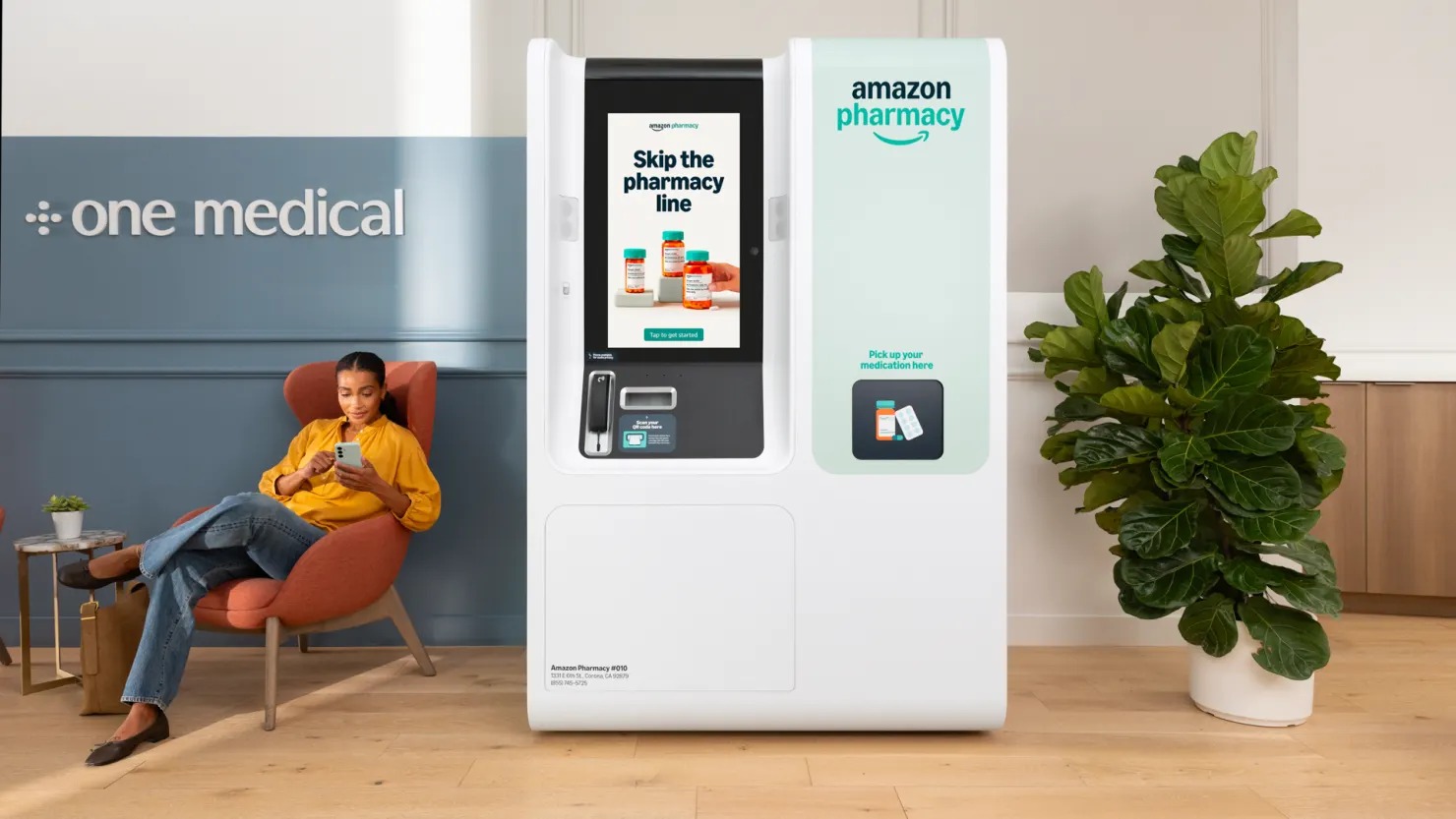
To ease the frustration of long waits, Amazon Pharmacy has announced the launch of pharmacy kiosks that allow patients to receive their prescribed medications immediately after their appointments. Starting this December, these kiosks will be installed at One Medical clinics in Los Angeles.
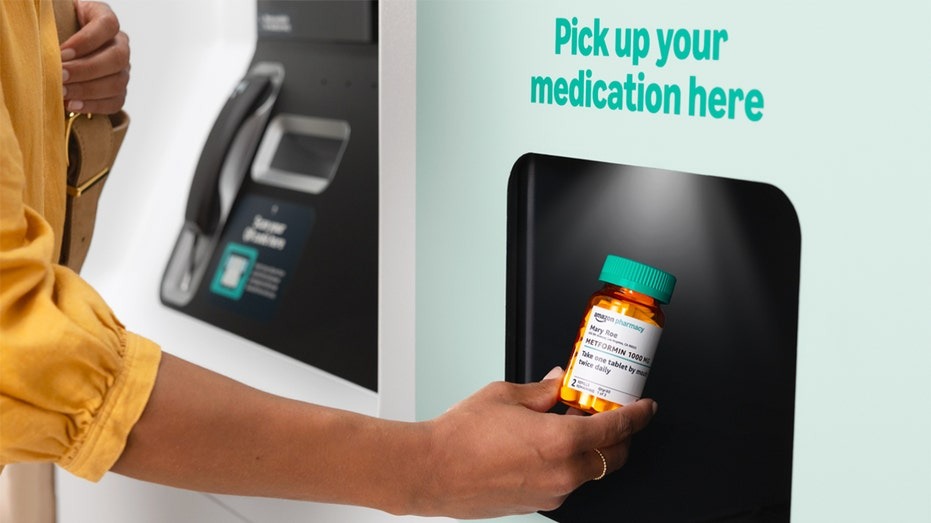
Through the Amazon app, patients can check the cost of their prescriptions in advance. After their appointment, they simply scan a QR code to instantly pick up commonly prescribed medications—like fever reducers or anti-diarrheal drugs—stocked in the kiosk. If needed, they can also consult with a pharmacist via video or phone right on the spot. |
|
|
With this service, office workers can pay through the app and pick up medications like fever reducers or cough suppressants from a kiosk right next to the exam room—returning to work in as little as ten minutes. Parents caring for children can also consult with a pharmacist via video late in the evening to confirm dosage instructions.
This kind of “Time Savior” service is expected to help address the issue of unclaimed prescriptions—which account for roughly one-third of all U.S. prescriptions—while also reducing barriers related to pharmacy access and long wait times. |
|
|
📈 Jenna's Insight
The reason Amazon’s Point of Care model looks promising is that it has the potential to sharply reduce customer drop-off by saving time and steps between checkup, diagnosis, and medication. This kind of “instantness” is rapidly becoming the new default in user experience design.
# Selection and Focus
Amazon’s service doesn’t aim to stock every medication—it focuses on the most commonly prescribed ones. By maintaining a curated, standardized mini inventory, the goal is to cover as many patient needs as possible with optimized efficiency.
🤔 Could the auto industry take a similar approach—covering 80% of demand by offering the top 20% of frequently requested accessories and maintenance parts?
➠ Micro-Retail Mobility Hubs
Install unmanned kiosks at key locations to sell ultra-high-frequency accessories (chargers, cables, OEM floor mats, trunk organizers). Customers could place an order and pick it up within 20–30 minutes.
➠ Embedded Consultation Touchpoints
Integrate a kiosk-linked consultation button inside the vehicle, allowing users to get information about parts, alternatives, and pickup locations through remote support.
➠ Instant Insurance Integration for Car-Sharing Users
When a customer picks up a shared vehicle, the in-car display could instantly show insurance and warranty coverage, provide quotes, and offer one-click options to purchase additional coverage on the spot.
|
|
|
✍️ A National Favorite in the Making: The Three-Line Sketchable Dacia Hipster
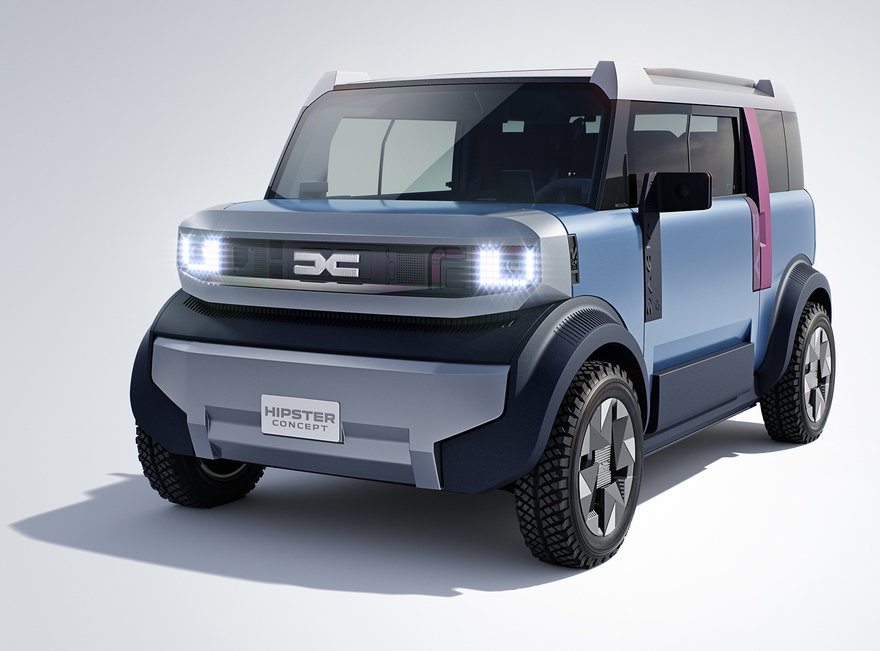
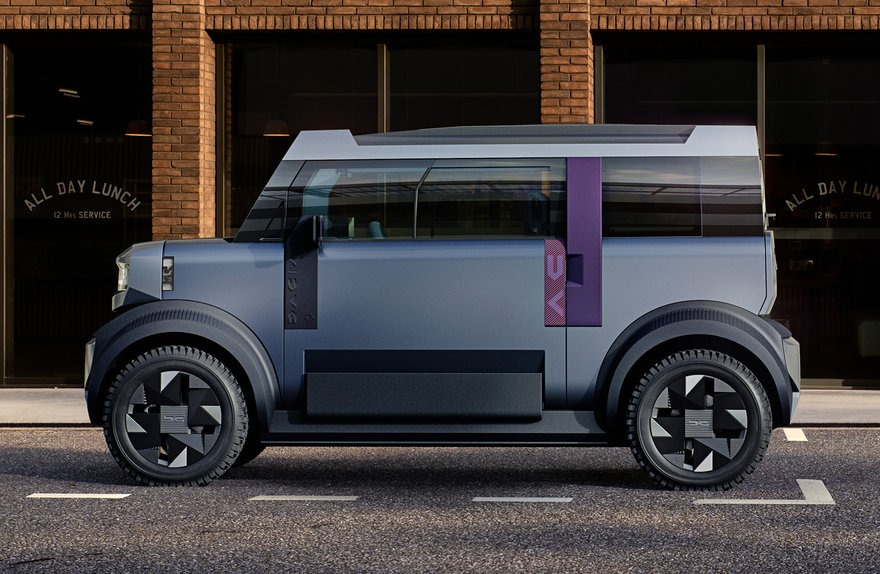
At first glance, it looks quite large—and from the rear three-quarter view, it even gives off a rugged Defender-like impression. But in reality, the car’s roof only reaches about chest height for someone 6'3".
Unveiled for the first time in Paris, this compact EV targets Europe’s E-car micro electric vehicle category, designed for navigating the narrow urban streets of Europe and Japan. Built under the design philosophy of “keeping only what’s essential,” the Dacia Hipster focuses on short city trips. Despite its petite 3-meter frame, it can still seat four passengers comfortably.
|
|
|
# Efforts to Maximize Affordability
The 2024 Dacia Logan was a family sedan designed for financially constrained customers, but the Hipster takes it further. Considering the social impact Logan had, Dacia aimed to create a new “people’s car”—economical, practical, and accessible. Let’s look at some of the design strategies under the philosophy of “keeping only what’s essential.”
|
|
|
- Reducing Body Size and Weight:
At just 3 meters long and under 800 kg, the Hipster minimizes raw material and production costs. A smaller battery and reduced structural stress on components help lower both manufacturing and maintenance expenses.
- Single Body Color:
To cut down on the costly and time-consuming painting process, the entire body uses a single color. Only three areas—the protection panels and skid zones—require special coloring. Dacia uses a mass-dye method, where color is mixed directly into the plastic during molding, eliminating the painting step entirely while still allowing for personalization. |
|
|
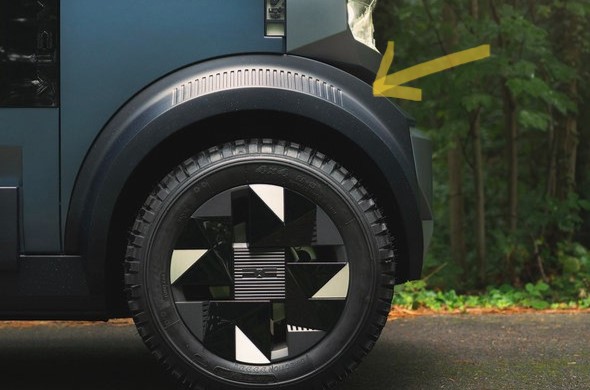
For components like the wheel arches, Dacia uses Starkle, a recycled material that helps meet environmental regulations while also reducing material processing costs. |
|
|
- Simplified Windows and Door Handles:
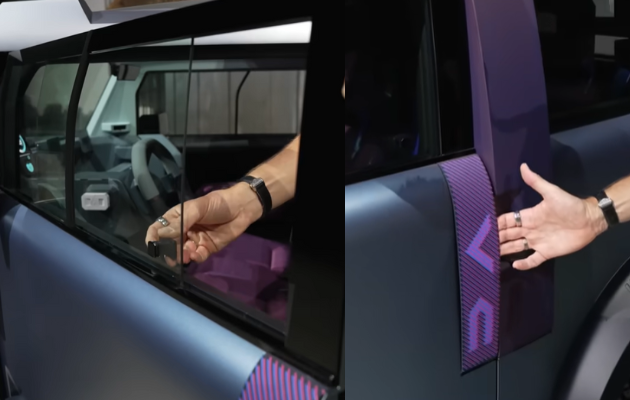
Instead of electric windows, the Hipster uses manual sliding windows, eliminating the need for motors and complex mechanisms. Traditional door handles are replaced with durable woven nylon straps on both the inside and outside of the doors. This design choice gives the car a more camping gear or outdoor equipment vibe rather than a conventional automotive feel, while also clearly reflecting the designer’s minimalist philosophy. The straps also serve as a visual accent against the single-body color.
|
|
|
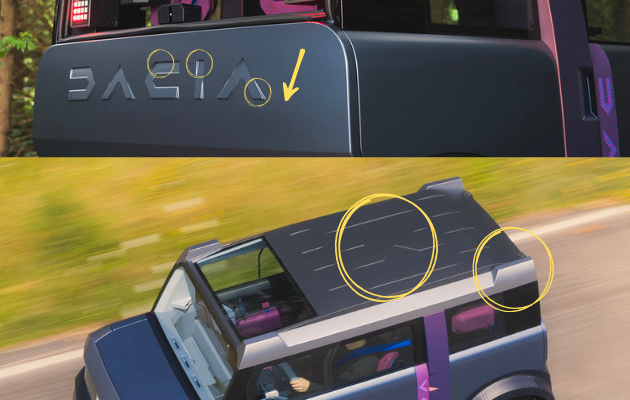
An interesting feature is the rear design, where the logo appears to be imprinted on a wide panel. It’s hard to see clearly in photos, but the imprint isn’t flat— the top is pressed deeply, while the bottom is slightly angled, creating a unique shadow and visual impact.
Combined with the aggressive corners and imprints on the roof area, this treatment enhances the way light interacts with the surfaces, giving the small car a presence that feels larger than its actual size. |
|
|
- Versatile Trunk Space:
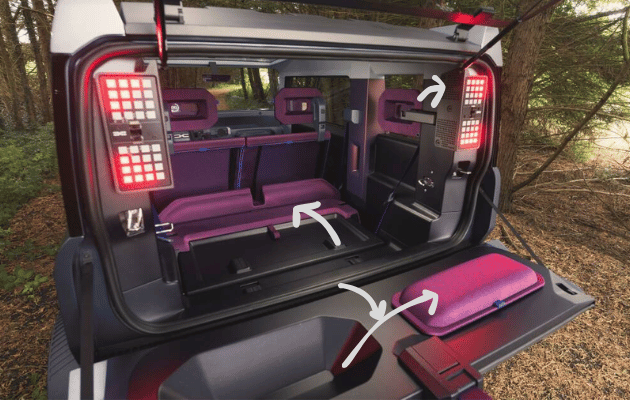
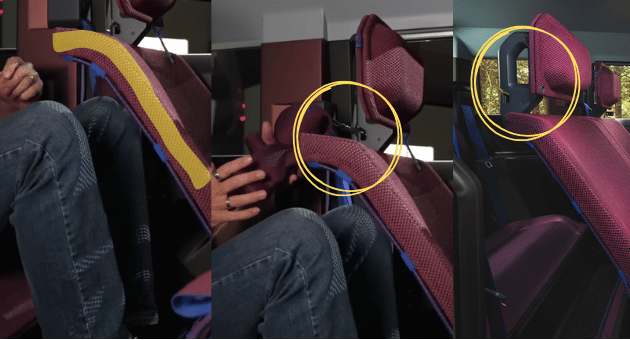
The rear door opens in a clamshell style, which might not look spacious at first glance. However, with the headrests folding to the sides and the second-row seats folding flat at 90 degrees, the trunk can accommodate items as large as a washing machine.
|
|
|
- YouClip:
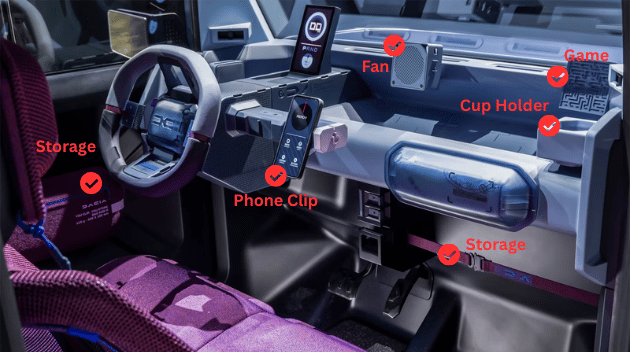
At first glance, it might look a bit messy, but there’s no other modular system that focuses so much on personalization. With this system, users can truly implement a BYOD (Bring Your Own Device) approach, maximizing both space efficiency and individuality. The system can be configured with up to 11 modules. |
|
|
- Quality Details:
Although the interior space is compact, the design quietly prioritizes passenger comfort. The front seats are shaped to avoid impacting second-row legroom, a versatile key hanger allows easy storage of important items or toys, and the integrated handles occupy no extra space—all contributing to a thoughtful, passenger-friendly experience.
If possible, I wish the car could be scaled up to 120% of its current size to drive comfortably on American roads. Its zero overhang and four-corner wheel placement give the short body a sense of visual stability and an iconic stance. The unified horizontal graphics create a clear brand identity, while the exterior contours, window graphics, and light lines make the car instantly recognizable. This concept perfectly embodies Design-to-Cost, balancing compactness, functionality, and strong visual identity—a small car that doesn’t feel small. |
|
|
🚁 Dart Drone: Safely Landing on a High-Speed Vehicle
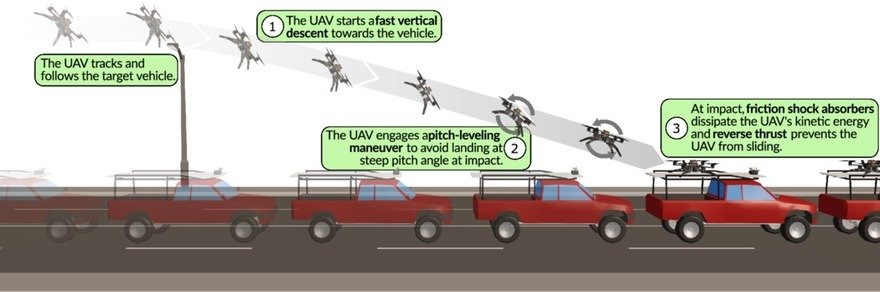
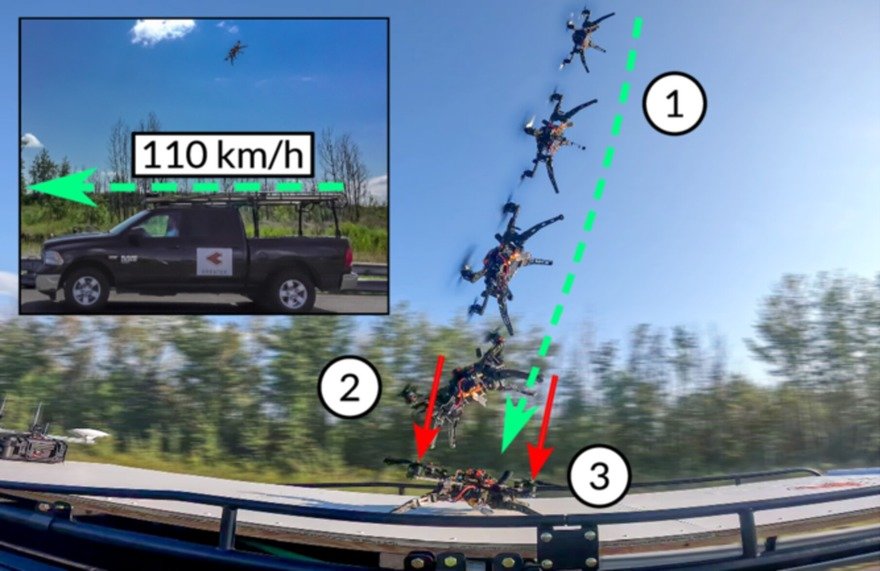
Over the past decade, attempts to combine drones and cars have taken many forms, usually leaning toward future mobility concepts or automated delivery ideas. Previous approaches typically involved drones taking off and landing on stationary cars or vehicles moving at very low speeds. The newly introduced DART (Direct Approach Rapid Touchdown) drone, however, takes a completely different approach. |
|
|
Developed at Université de Sherbrooke in Canada, this drone can safely land on a vehicle traveling at 70 mph (about 113 km/h). Unlike most military drones, which rely on simple drop or collision-style landings, the DART drone adjusts its flight trajectory to match the vehicle’s angle of approach and rapidly decelerates just before touchdown, ensuring a stable landing.
This technology could enable a range of applications: delivering packages or emergency supplies to moving vehicles on highways, deploying search and rescue robots to accident scenes, or placing inspection and surveillance equipment on vehicles in motion. |
|
|
🤖 This Week’s Robots
# Chef Knife with Ultrasound for Wrist Protection
For anyone who relies heavily on wrist strength when cooking, this knife could be a game-changer. Seattle-based startup Ultrasonics has developed the C-200 chef knife, which uses ultrasonic technology to generate 40,000 invisible micro-vibrations per second. This reduces the force needed for cutting by up to 50%, making it easy to slice through everything from tough meat to tomato skins and room-temperature butter. Efficiency in the kitchen goes up dramatically—though, of course, a slip while cutting could still be a problem… 😅 (Evangelion Progressive Knife) |
|
|
# Shopping Cart–Style Cargo Drone
Developed by the robotics team at Seoul National University of Science and Technology, the Palletrone is a flying shopping cart robot that leverages drone technology. The drone is positioned beneath a load-bearing platform, and the user steers it like a shopping cart by holding the handle.
During flight, it actively controls tilt side-to-side and front-to-back to maintain stable horizontal flight, keeping balance even with cargo on board. Currently, it can carry about 3 kg, and it can navigate various terrains, including stairs.
This technology could have broad future applications, from autonomous delivery and drone taxis to aerial battery exchange systems. (For someone with a disc injury, even 3 kg can feel like a heavy load!) |
|
|
About five and a half hours north of where I live lies a small town called Bishop. In the fall, many Southern Californians make the trip to see the aspen trees turn yellow. On a recent 12-hour day trip in search of autumn colors, the leaves weren’t yet 100% golden, but the season was unmistakably there.
Even though not every leaf had turned, the beauty of nature was so striking that it felt like my heart was swelling with richness. If you happen to be in California in October, I highly recommend visiting. You’ll find yourself staring in awe at the fall sky, with its heights impossible to gauge. |
|
|
Kia Design Center America
Jenna Chwee
|
|
|
|
|